15 Top Things to Do in Zambales: Beaches, Islands & Hidden Gems

Just a few hours north of Manila, Zambales offers some of the most underrated coastal adventures in the Philippines.
This long stretch of rugged coastline on the western side of Luzon is known for its volcanic coves, surf beaches, quiet islands, and wide-open sunsets over the West Philippine Sea. Despite its natural beauty, Zambales still feels refreshingly uncrowded compared to more famous destinations like Boracay or Palawan.
I’ve always enjoyed exploring this part of Luzon because every trip feels a little different. One day you might be island hopping through dramatic coves, the next you’re surfing in a laid-back beach town, hiking to a hidden waterfall or active volcano, or simply watching the sunset from a quiet stretch of sand.
Note: Prices listed throughout this guide are accurate at the time of writing but are subject to change. Always confirm current rates locally.
Things To Do In Zambales
1. Explore the Famous Coves
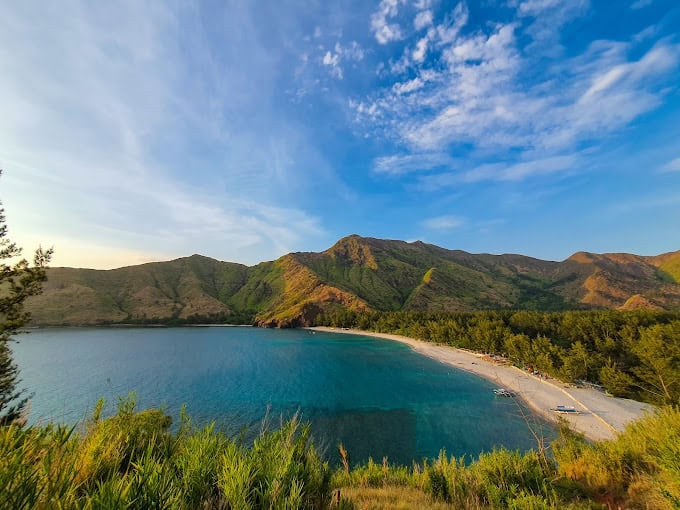
The beach coves along the San Antonio coastline are unlike anything most people picture when they think of the Philippines. Pine-like agoho trees growing along gray volcanic sand, mountains rising behind the shore, and a quietness that feels far removed from the crowded beach resorts most visitors expect.
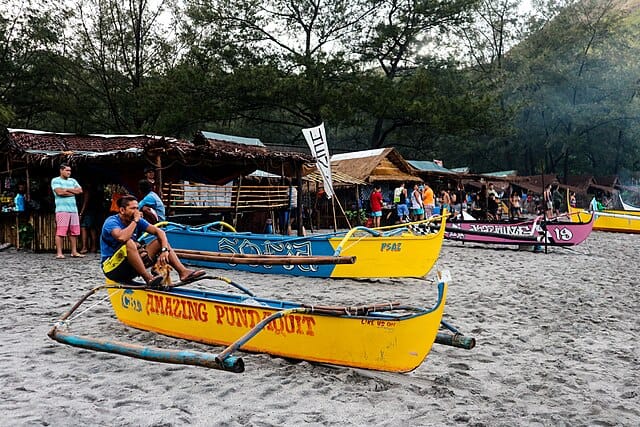
Most trips start in the small fishing village of Pundaquit, the usual jump-off point for boat tours. From there, local boatmen take visitors along the rugged coastline where several hidden coves sit between steep mountain slopes. The boat ride itself is part of the experience, with cliffs rising from the sea and quiet beaches appearing around each bend.
Anawangin Cove
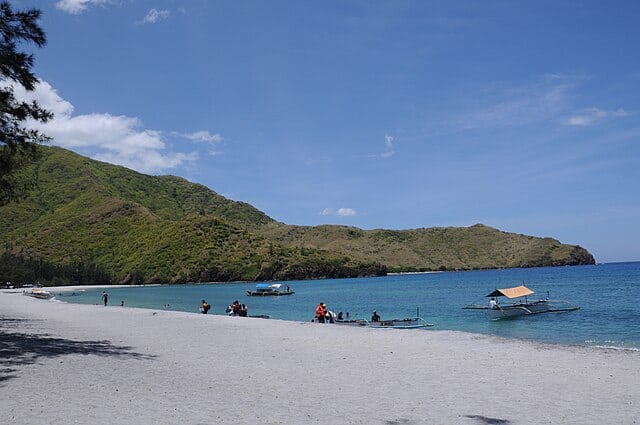
The most popular of the three and the easiest to reach. Wide bay, dense agoho trees perfect for camping, and volcanic sand that gives the whole place a moody atmosphere white-sand beaches can’t match. Sunsets here are the kind that make people put their phones down. First-timers often book one night and wish they’d booked two.
Nagsasa Cove
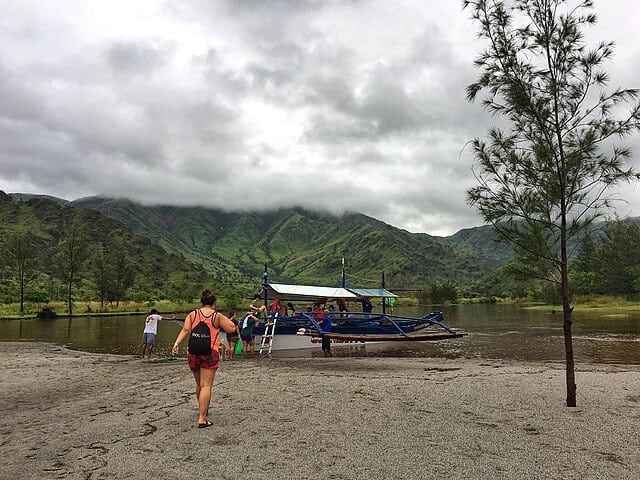
Bigger, wilder, and more remote than Anawangin. A river runs through the campsite down to the beach, forming a sandbar where fresh water meets the sea, the kind of detail that makes a place feel like a discovery. The mountains are more imposing, the crowds thinner, and the atmosphere closer to an expedition than a beach trip.
Talisayen Cove
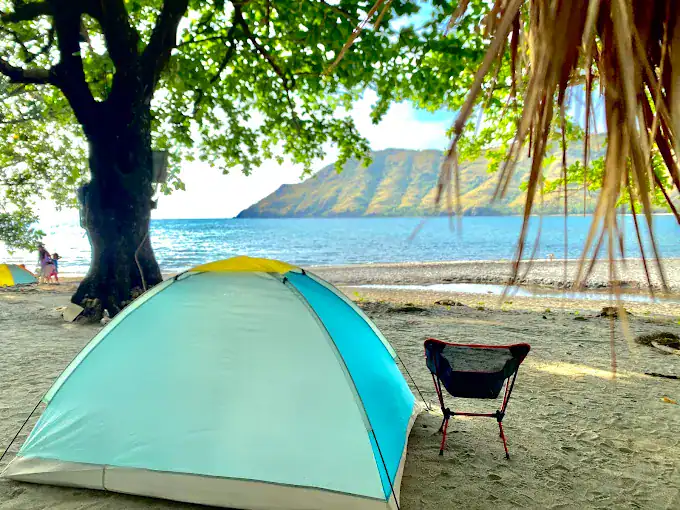
No beach bars. No vendors. No crowds. Talisayen is the smallest of the three and the one most likely to give you a stretch of Philippine beach entirely to yourself. It’s not as dramatic as Nagsasa or as polished as Anawangin, but it’s quiet in the way that genuinely quiet places are quiet.
2. Visit the Islands
The islands off the Zambales coast don’t get the same attention as the coves, but they should. Each has its own distinct personality. One is all rugged history, one is pure tropical postcard, and one is the kind of quiet that makes you wonder why more people haven’t found it yet.
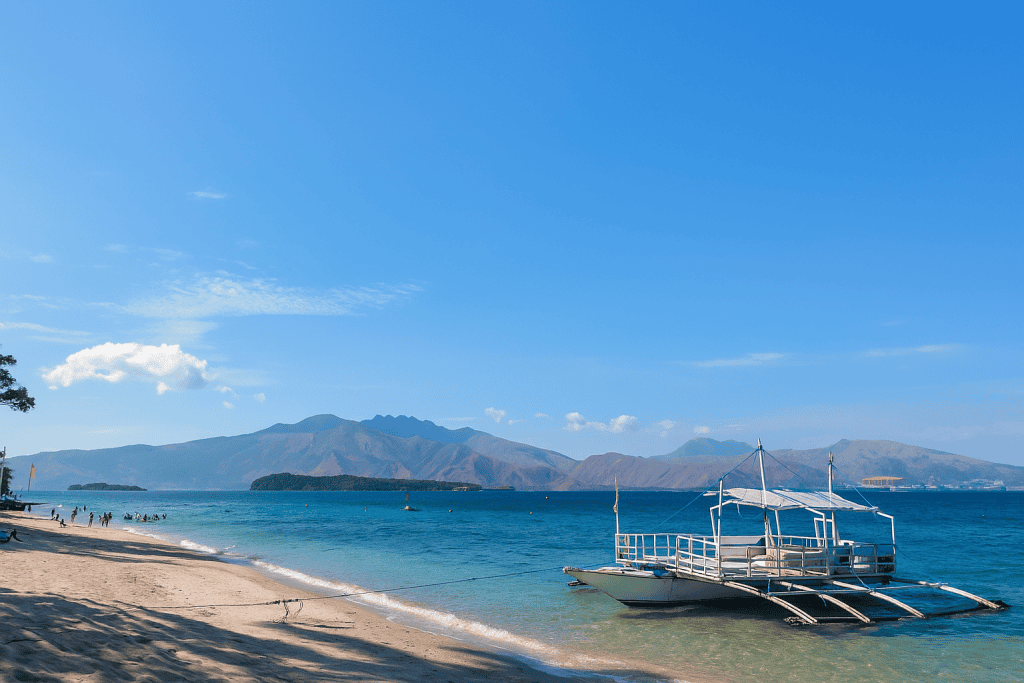
Camara Island, a small rocky outcrop just off Pundaquit, is worth a stop on the way to Capones. A sandbar connecting two rock islets appears at low tide and makes for one of the more unusual photo stops in Zambales.
Banca boats can be hired through local resorts or directly at the beach. Bring a dry bag; waves sometimes splash into the boat.
Capones Island
Capones is the only island on this list where the main attraction isn’t the beach; it’s the Faro de Punta Capones, a Spanish-era lighthouse built in 1890 to guide ships into Subic Bay. A short hike from the shore gets you to the ruined keeper’s house and the weathered brick tower, where views stretch across the West Philippine Sea in every direction.
There are sandy areas for swimming and picnicking, and the surrounding water is calm enough for a quick dip after the hike. With a heritage restoration now being planned, it’s worth visiting before it changes.
Potipot Island
Where Capones is all history and drama, Potipot is the complete opposite. This small island off Candelaria sits just a quick boat ride from Barangay Uacon, with the fare running around ₱400 per boat. White sand, calm, clear water, and small enough to walk the entire shoreline in under 30 minutes.
Shallow swimming areas and coral patches line the shore, so reef shoes are worth bringing since some sections have coral and small rocks. Genuinely beautiful without trying too hard.
Magalawa Island
Magalawa takes more effort to reach than the other islands, but fewer crowds and fresher seafood make it worth it. The 10 to 15-minute boat ride from Barangay Luan lands you on an island with two camps. Armada, which has the better beach and a sandbar, and Ruiz, which is better for kayaking and snorkeling.
Both offer packages that include boat transfers, meals, and activities. Accommodation ranges from tent pitching to air-conditioned rooms. Electricity only runs at night, so be sure to bring a power bank.
3. Surf at Liwliwa Beach
Once a quiet fishing village in San Felipe, Liwliwa has grown into one of the most beloved surf destinations in the Philippines. Local artists, musicians, and surfers have shaped it into something genuinely unique: a laid-back beach town that still feels like a local’s place rather than a tourist destination.
Surfing is the main draw, and the waves are well-suited for beginners. Surf season peaks from November to early March. Lessons run around ₱600 per hour, including an instructor, while board rental alone is around ₱300 per hour.
Even if you don’t surf, Liwliwa rewards a slower pace. The beach faces west, which means sunsets here are spectacular. Small restaurants and cafés line the area, and accommodations ranges from tent pitching to air-conditioned rooms.
4. Camp on the Beaches
There are no hotels at Anawangin, Nagsasa, or Talisayen, just camping areas under agoho trees and the kind of quiet that’s hard to find anywhere near Manila. Anawangin is the easiest to access, Nagsasa is quieter and more remote, and Talisayen is the most secluded of the three.
Tent rentals run around ₱300–₱500 per night, and entrance fees are ₱100–₱150 per person. Buy all supplies at San Antonio Public Market before heading out, since there are no vendors at the coves and no ATMs nearby.
Bring cash, water, a power bank, and a flashlight.
5. Watch the Sunset
Because the entire Zambales coastline faces the West Philippine Sea, sunset viewing here is effortless. The sun drops directly into the water in front of you with nothing blocking the view.
Pundaquit Beach in San Antonio is one of the most popular spots, with wide open views and a relaxed atmosphere as boats return from the coves at the end of the day. Botolan Beach is quieter with equally unobstructed views. For something more dramatic, the coves at Anawangin and Talisayen frame the sunset between mountain slopes and sea in a way that’s hard to match anywhere else in Luzon.
No planning required, just face west and wait.
6. Take a Scenic Road Trip
The main highway through Zambales follows the coastline for most of its length, which means almost every kilometer comes with an unobstructed ocean view. It’s the kind of road that makes you pull over more than you planned.
The most straightforward route runs from San Antonio through San Felipe, Cabangan, Botolan, and up to Iba and Palauig in the north. Each town has its own character. San Felipe is the surf town, Botolan sits at the foot of Mount Pinatubo, and Iba is the provincial capital.
Between April and May, roadside mango stands sell Zambales Carabao mangoes at their peak, some of the sweetest in the Philippines.
For visitors without a vehicle, renting a car is the most practical option. Tricycles and jeepneys connect the towns, but generally won’t give you the flexibility to stop whenever something catches your eye, which is half the point.
One important note if you’re driving at night: motorcycles, scooters, and tricycles frequently travel without lights. Stay alert and keep your speed down after dark. I do not drive after dark in the Philippines for this very reason. Invest in a dashcam to protect yourself against the sometimes unpredictable roads.
7. Day Trip to Mount Pinatubo
Locals call it “The Beautiful Disaster.” On June 15, 1991, Mount Pinatubo erupted in what became the second-largest volcanic eruption of the 20th century. The summit collapsed, the surrounding landscape was buried under meters of ash and lahar, and over 200,000 people were displaced.
What grew back is one of the most surreal landscapes in the Philippines, and one of the best day trips you can take from anywhere in Zambales.
The jump-off point is Camp Kainomayan in Botolan. Tours depart at 6 AM, and the two-hour 4×4 ride across the Bucao River lahar field through ash valleys, river crossings, and volcanic debris is bumpy, dusty, and absolutely worth it. From the drop-off, it’s roughly a one-hour hike to the crater.
It’s beginner-friendly but heat-intensive, so bring at least 1.5 litres of water, sunscreen, and shoes you don’t mind getting wet.
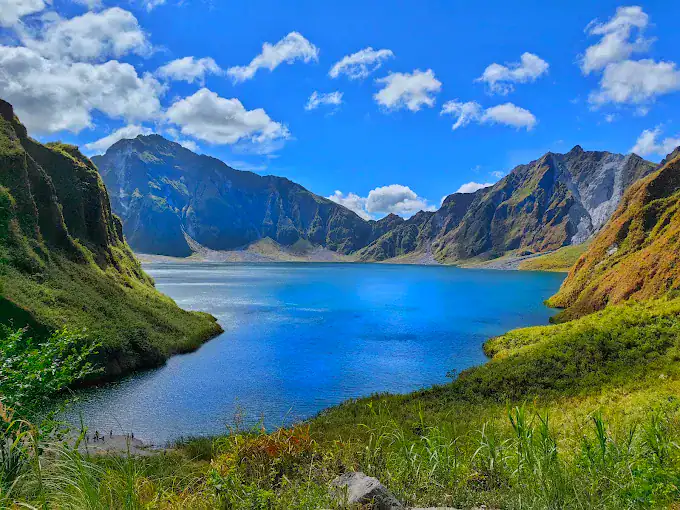
The crater lake at the top is turquoise, impossibly still, and ringed by towering volcanic cliffs. Swimming is strictly prohibited, and guides enforce it.
Budget ₱2,500–₱3,500 per person, including the ancestral domain share that goes directly to the Aeta communities, the original stewards of this land. Book through a DOT-accredited operator in advance, and go on a weekday if you can.
8. Discover Mapanuepe Lake
Mapanuepe Lake shouldn’t exist. Before 1991, this valley in San Marcelino was home to thriving barangays, farms, homes, a chapel, and everyday life. Then Pinatubo erupted, the lahar blocked the river, and the valley slowly filled with water. Today, only the steeple of the submerged parish church breaks the surface.
It’s one of the most quietly haunting sights in Zambales.
The rolling hills, grazing cattle and carabaos, and wide open sky are what earned it the nickname “New Zealand of Zambales.” It looks genuinely unlike anything else in the province, and unlike anything most visitors expected to find here.
Activities include boat tours to the sunken steeple, camping, kayaking, fishing, and ATV rides along the lahar trail. Tent rentals run around ₱350 per night, and the campsite has two zones. Phase 1 has shade, Phase 2 has the iconic open views but brutal midday sun. No restaurant on site, just sari-sari stores, so stock up at San Marcelino Public Market before heading out.
9. Hike Mount Balingkilat
The Aeta named it Balingkilat, ‘Mountain of Thunder’. US Navy servicemen from Subic called it Pointed Peak. At 1,100 meters, the summit delivers views of Nagsasa, Anawangin, Talisayen, Subic Bay, and the full sweep of the West Philippine Sea.
The trail starts at Sitio Cawag and climbs for 4 to 6 hours across exposed, rocky terrain with almost no shade and a knife-edge scramble near the top. Start at 2 or 3 AM to summit by sunrise. Entry is ₱100, and an Aeta guide is mandatory.
If you want to extend the day, the traverse drops you directly at Nagsasa Cove. A serious mountain hike, then a swim. Hard to beat.
10. Swim at Lubong Nangoloan Falls
The falls go by two names. The official one is Lubong Nangoloan. Locals more commonly call it Anghalo Falls, named after a legendary giant whose footprints, according to folklore, are still pressed into the bedrock on the second tier. It’s the kind of detail that makes a waterfall worth visiting even before you’ve seen it.
The trek from the jump-off point takes 15 to 20 minutes through fields and forest. A carabao cart will also take you there for a small fee. It’s frankly half the fun. The falls have three levels, each with its own pool for swimming. The third tier requires some rock scrambling to reach. Entrance is ₱30. If you’re already in San Felipe for the surf at Liwliwa, this is an easy and worthwhile half-day addition.
One practical note: this is a streaming waterfall that dries up significantly in summer. Visit between August and November for the best flow. If it starts raining hard while you’re there, leave immediately. Flash flooding can happen fast.
11. Take a Day Trip to Subic Bay
Subic Bay sits at the southern end of Zambales, about an hour from San Antonio. It doesn’t feel like the rest of the province. The Subic Bay Freeport Zone is orderly and noticeably more developed, a legacy of its decades as one of the largest US naval bases in Asia, which closed in 1992 after the Pinatubo eruption accelerated the American withdrawal.
The options are genuinely varied. Families head to Ocean Adventure for the marine shows, Zoobic Safari for the tiger safari, the only one of its kind in the Philippines, or Tree Top Adventure for zip lines through the forest canopy. Divers and snorkellers go to the Blue Hole or Camayan Beach.
When it’s time to eat, head to the waterfront strip. Texas Joe’s House of Ribs does slow-smoked American BBQ and steaks right on Waterfront Road and has been a local favourite for years.
Come early and pick two or three things. A full day here goes faster than you’d expect. It’s worth the drive.
12. Play at Inflatable Island
Inflatable Island covers 4,200 square meters of floating playground: slides, towers, bridges, obstacle courses, and human launchers anchored in the waters of Subic Bay. Bring people who are willing to look completely undignified. That’s the point.
Beyond the inflatables, there’s a Bali-inspired lounge with tiki huts and pastel bean bags, a restaurant, and a swimming pool for younger kids who don’t meet the height requirement for the main playground. Day passes start from ₱899 and include a ₱500 food and beverage voucher.
13. Discover the Secret Beaches
The coves, islands, and surf beaches in this guide are the highlights. But Zambales has more coastline than most people realise, and a lot of it remains genuinely off the radar. Silanguin Cove, which is farther along the San Antonio coast than Anawangin or Nagsasa, is wider, more remote, and on a good day, you may have it entirely to yourself.
For the full list of hidden beaches, coves, and island escapes, check out the Secret Beaches in Zambales guide.
14. Try Fresh Seafood
The best seafood in Zambales isn’t in a restaurant, it’s at the small paluto spots and beachside grill stalls scattered along the coast, where fishermen bring in the morning catch. The concept is simple: pick your fish or shellfish fresh from the display, tell them how you want it cooked: grilled, sinigang, or steamed with ginger, and eat it within feet of the water it came from an hour ago.
Bangus, tanigue, lapu-lapu, and talaba are a few options, but what’s available changes daily depending on what is caught that morning.
Iba, the provincial capital, has a stretch of casual paluto spots along the highway with ocean views and prices that will make you wonder why you ever ate at a mall food court. If you’re heading to the coves, stop at San Antonio Public Market first for fresh seafood, charcoal, and everything you need to grill on the beach, at prices that make the Pundaquit markup feel very real.
15. Ride an ATV on the Lahar Fields
If Mount Pinatubo is on your list but a full-day guided trek feels like too much, the lahar fields around Camp Kainomayan in Botolan offer a different way into the same landscape. The Bucao River valley, volcanic ash, hardened debris, river crossings, and open sky are some of the most unusual terrains in the Philippines, and an ATV puts you directly in the middle of it.
Rides run from short 15-minute sessions across the lahar flats to longer packages that take you deeper into the valley toward Malomboy. No experience needed. It’s a strong option for families, groups, or anyone who wants the Pinatubo experience without the early start and full-day commitment.
Planning Your Trip to Zambales
Where is Zambales?
Zambales is a long coastal province on the western side of Luzon, facing the West Philippine Sea. It sits north of Bataan and west of Pampanga, about 3 to 4 hours from Manila by car, and roughly 2 hours from Angeles City. The coastline stretches over 170 kilometers through surf towns, fishing villages, quiet coves, and some of the most underrated beaches in the Philippines.
Why Visit Zambales?
Zambales doesn’t feel like a destination packaged for mass tourism. The coves have gray volcanic sand and pine-like trees along the shore. One of the islands has a 19th-century Spanish lighthouse and almost no crowds. The surf towns have a genuine creative community, and the inland scenery left behind by Mount Pinatubo looks like nowhere else on Luzon. For travelers willing to get off the main tourist trail, it consistently delivers.
When Is the Best Time to Visit?
The dry season from November to May offers the clearest skies and calmest seas for island hopping and cove camping. Surfers prefer October to March for more consistent waves at beaches like Liwliwa. Avoid the typhoon season for anything boat-dependent, as seas can close cove access for days at a time.
How to Get to Zambales
Most visitors drive via NLEX and SCTEX, then continue west toward San Antonio, San Felipe, or Iba. The drive from Manila takes 3 to 4 hours with an early start. Buses run regularly to Olongapo, from where jeepneys and tricycles connect to towns further up the coast. From Angeles City, it’s roughly 2 hours via SCTEX.
Getting Around Zambales
A private vehicle gives you the most flexibility. The coastal highway is easy to navigate, and half the appeal is pulling over whenever something catches your eye. Tricycles cover short distances between towns. For the coves and islands, boats are hired through local boatmen at Pundaquit Beach on the spot.
How Many Days Do You Need?
A weekend covers one or two areas well. Three to four days lets you combine island hopping, beach camping, a waterfall, and the coastal road trip without rushing. Add Pinatubo and Mapanuepe Lake, and you’ll want at least four days. Base yourself in Iba or San Antonio.
Where to Stay in Zambales
Accommodation in Zambales ranges from simple beachfront cottages to dome villas with private plunge pools and everything in between. Options are spread across the province, from San Antonio in the south near the coves to Iba and Botolan further north.
For a full breakdown of the best resorts and hotels across the province, check out my post about Where to Stay in Zambales.
It’s a Wrap
Zambales doesn’t announce itself. There’s no airport, no famous resort strip, no single landmark that everyone comes to see. What it has instead is a long, wild coastline that rewards the kind of traveler who’s willing to take a boat to a cove, wake up before sunrise on a volcanic sand beach, ride an ATV on a lahar field, trek to hidden waterfalls, take a boat to a deserted island, or drive north until the road runs out of towns worth stopping in.
The activities in this guide barely scratch the surface. Come once, and you’ll understand why people who discover Zambales tend to come back, and why those who live nearby, like me, keep finding reasons to explore more of it.