Is Baguio Worth Visiting? What You Need to Know

There is no other place in the Philippines quite like Baguio.
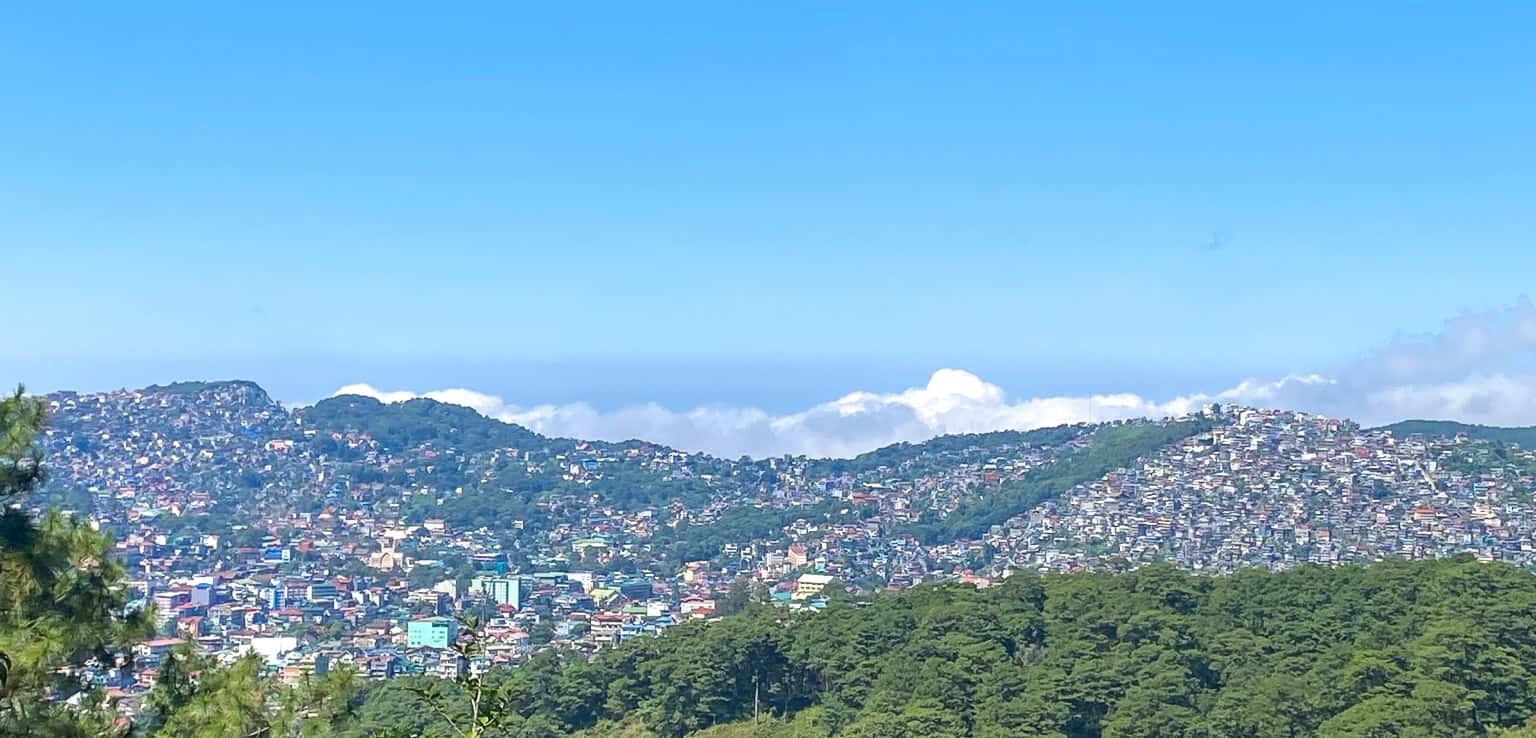
It’s a bustling city built on mountain ridges roughly 1,500 meters above sea level.
Coming up from the lowlands, the change is immediate. The air turns cool, pine trees cover the hillsides, and there’s an energy about the place that I’ve always liked.
It isn’t perfect, though.
Weekends bring crowds and traffic, and the city is going through growing pains, with new condos and other buildings changing the landscape.
Fair warning! Baguio is one of my favorite places, so I’m a little biased.
But I’ll do my best to answer “Is Baguio worth visiting?” as fairly as I can, downsides included.
Let’s dig in.
Is Baguio Worth Visiting? The Verdict
Yes, Baguio is worth visiting if you want cool weather, Cordillera culture, the food and coffee, or a base for Benguet’s mountains. Weekends and holidays get busy around the city center, Burnham Park, and Session Road, while the rest of the city stays calmer.
Best for: anyone who wants cool mountain air in an otherwise hot and humid country. Remote workers and long-stay visitors can settle in for a week or more and explore on quieter weekdays. Hikers can stay in the city and leave early for Benguet peaks like Mt. Ulap or Mt. Pulag.
Skip if: your trip is short and built around beaches, or you’re picturing untouched wilderness, since the city is too built up for that. Travelers with mobility issues should think twice too. Most of Baguio is steep, and even short walks can mean climbing hills.
Ideal stay: one night is rushed. Two to three full days cover the city and one side trip into Benguet.
Where else in the Philippines do you get pine trees and jacket weather without giving up city comforts? For me, that’s worth a little weekend traffic.
What Makes Baguio Special
Baguio offers something that’s hard to find elsewhere in Luzon: a lively, bustling city surrounded by mountains. You get the cooler weather, pine trees, and mountain scenery without giving up the restaurants, cafes, shops, and attractions that make a city interesting.
One thing I’ve always appreciated about Baguio is how clean and well-kept it feels compared with other places I’ve visited in the Philippines. It’s also a great city for walking if you don’t mind hills.
At roughly 1,500 meters above sea level, those steep streets can give your legs and lungs a serious workout.
Baguio is a university city with a large student population, and English is widely spoken. That makes it relatively easy to get around and communicate with locals, especially for foreign visitors.
There’s something about Baguio that keeps drawing me back. Maybe it’s the mountain setting, the cooler air, or the energy of a busy city tucked into the Cordilleras. Whatever the reason, my spirits are always lifted when I’m in Baguio.
The Downsides of Baguio
Traffic
Baguio’s roads were built for a much smaller city. Weekends and holidays back up the center, and Holy Week, Christmas, and the Panagbenga Flower Festival in February are the worst. When we drive up, the car stays parked, and we get around by jeepney or taxi.
Crowds at the Big Viewpoints
Burnham Park, Botanical Gardens, and Wright Park draw some of the biggest crowds, and their souvenir stalls sell much of the same stuff. Go early, or on a weekday.
Air and Overdevelopment
Baguio’s mountain setting doesn’t guarantee clean air. Vehicle emissions and seasonal surges in tourism contribute to an air pollution problem that can worsen during busy periods.
A May 2026 investigation by the Philippine Center for Investigative Journalism found that Baguio’s levels of PM2.5, tiny airborne particles that can penetrate deep into the lungs, exceeded World Health Organization guidelines on several days during Holy Week. The city’s annual average pollution levels have also remained above the WHO’s recommended limit.
Construction keeps climbing those hillsides, though, and some of the pine cover is giving way to buildings.
The Hills
The city looks walkable on a map, but many streets are steep enough to punish bad knees. Pushing a stroller uphill is hard work.
We’ve stayed near Burnham, where we could walk most places, and in a house farther out, where every errand meant a jeepney or taxi ride into town.
Rainy Season Roads
In the rainy season (roughly June to October), typhoon landslides can close Kennon Road, Marcos Highway, or Naguilian Road. Check conditions before heading up.
Best Time to Visit Baguio
The best time to visit Baguio is November to February, ideally midweek. It’s the cool, dry season, and weekdays keep you clear of the worst crowds.
Christmas to New Year packs the city, and so do Panagbenga weekends in February. Unless the festival is why you’re going, pick other dates. The same goes for Holy Week, which falls in late March or April.
June to October is the trade-off season. Afternoon rain is routine, and typhoons can close the mountain roads. In return, crowds generally thin out, and you may find better accommodation deals outside holidays and other busy periods.
Is Baguio Right for You?
Baguio isn’t for everyone, and that’s fine. Beach-first travelers often leave wondering why they bothered. Anyone worn down by lowland heat tends to wish they’d come sooner.
| Go if you… | Skip if you… |
| Are tired of the heat and want sweater weather without leaving the country | Are on a short trip and came mainly for beaches |
| Plan your days around food, coffee, markets, and sightseeing | Only have a long weekend, since the road trip up and back eats most of it |
| Like local craft, woodcarving, weaving, and art spaces | Expect untouched mountain wilderness inside city limits |
| Want a base for hikes and day trips into Benguet | Have mobility issues |
| Are an expat looking for a cool-weather month away from the heat and humidity of the lowlands | Want an exciting nightlife |
Beach lovers don’t have to choose, though. La Union, one of Luzon’s most popular beach towns, is about 2 to 3 hours down the hill.
With 10 days in the Philippines, you can spend a few cool days in Baguio, then head straight to the coast for sand and surf.
Families with young kids do well here. Burnham, Wright Park, and Camp John Hay all have room to run, and the cool air keeps everyone in better spirits outdoors.
Just keep close track of them. Popular spots get crowded on weekends, and the streets between them are steep, busy, and short on sidewalks.
Getting to Baguio From Manila or Clark
From Manila
Buses leave Cubao, Pasay, and Sampaloc, with Victory Liner and Genesis among the main operators. The journey usually takes around 5 to 6 hours, sometimes longer depending on traffic and the service. Overnight departures are available from Cubao and Pasay. Book ahead for weekends and holidays.
From Clark and Angeles City
Clark is a convenient starting point if you’re already in Central Luzon. Genesis operates buses from the arrivals-area bus station at Clark International Airport’s Terminal 2 to Baguio, with a journey time of approximately 3 to 4 hours.
Dau Bus Terminal in Mabalacat is another option for travelers staying around Angeles City, although departure times and fares differ from the airport service. Check the boarding point when booking.
Fares at a Glance
From Manila (Victory Liner)
| Bus type | One-way fare |
| Regular Aircon | ₱650 to ₱700 |
| Deluxe | About ₱800 |
| First Class | About ₱1,050 to ₱1,100 |
| Royal Class (sleeper) | About ₱1,600 |
On an overnight bus from Manila, First Class is worth the upgrade.
From Clark (Genesis)
| Bus type | One-way fare |
| Regular Aircon | About ₱500 |
| JoyBus Deluxe | About ₱560 |
| JoyBus Executive | About ₱660 |
| JoyBus Premiere | About ₱700 |
Fares, schedules, and departure points may change without notice. Check with the bus operator before traveling.
Bus, Van, or Drive
The bus suits most travelers. A private van makes sense for families or groups with luggage. Driving yourself works until you arrive: parking is scarce, the streets are steep, and weekend traffic crawls. Park the car and use taxis or jeepneys once you’re in town.
Marcos Highway is one of the main routes into Baguio. Kennon Road is another scenic approach, although access can be affected by landslides and road restrictions.
Baguio vs. Other Luzon Escapes
Baguio isn’t the only way out of the lowland heat. Luzon has dozens of mountain towns, beach strips, and weekend getaways, but these four come up most often when people are deciding where to go instead. Here’s how they compare.
Sagada
Think of Sagada as Baguio with the city stripped away. Hanging coffins, caves, rice terraces, and pine ridges, with a fraction of the traffic and none of the malls. The catch is distance.
It sits another 5 to 6 hours north of Baguio on the winding Halsema Highway, so it works best as an add-on for travelers with a few extra days.
La Union
Different trip entirely. La Union trades pine trees for surf breaks, and cool mornings for warm beach days.
San Juan is the hub, where surf schools line the beach, and the crowd skews young and social. Just don’t expect an escape from the weekend rush. Saturdays here get every bit as packed as Baguio.
Tagaytay
Closest cool-air escape to Manila, roughly 2 to 3 hours south depending on traffic. You get Taal Volcano views and ridge-side restaurants, and the temperature drop is real but modest. Tagaytay is a day trip or an overnight; Baguio is a destination.
Zambales
Coming from Clark, Zambales is the easy alternative when you want sea instead of mountains. The coastline is long, with quiet coves tucked between the busier beach towns and islands just offshore. It stays hot year-round, so it solves a different problem than Baguio does.
If You Go: Spots That Earn the Trip
A full rundown lives in my ‘Things to Do in Baguio’ guide.
If you only have a day or two, start here:
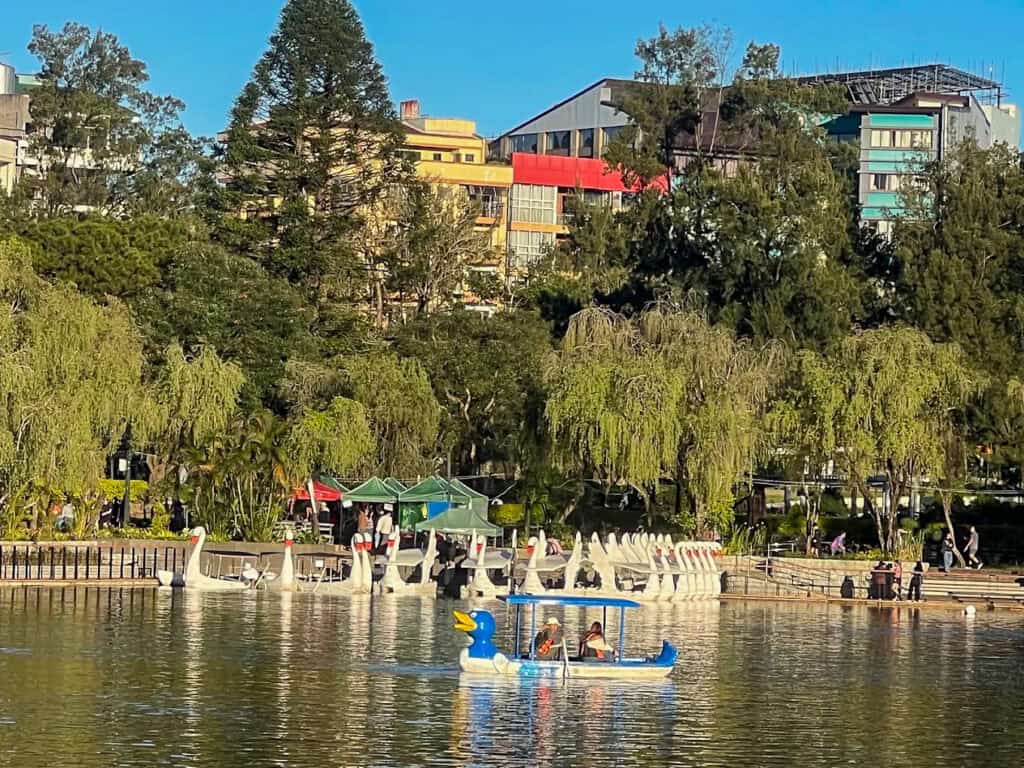
- Burnham Park: Take a stroll around the lake, rent a swan boat, or relax in the gardens. It’s one of Baguio’s most popular attractions, so visit on a weekday if you want to avoid the biggest crowds.
- Camp John Hay: Walk the pine trails, then bury your bad thoughts at the Cemetery of Negativism, a mock graveyard that’s as odd and fun as it sounds.
- Botanical Garden: Freshly renovated, with an orchidarium and the Cordillera Village. Keep coins handy if costumed locals join your photo.
- Night market on Harrison Road: After 9 PM, barbecue and kwek-kwek fill one end of the closed-off road, thrift racks the other.
- La Trinidad strawberry farms: Pick your own between November and June. March and April are the peak.
- Mines View Park: Best on a clear day, when the view runs across the Cordillera mountains.
How Many Days Do You Need in Baguio?
Two to three full days are ideal for a first visit to Baguio. That’s enough time to see the main attractions, enjoy the activities that interest you, and still have time to relax without feeling rushed.
You can squeeze some sightseeing into an overnight trip, but you’ll spend a good portion of your visit traveling to and from the city. With two or three days, there’s time to explore Burnham Park, Camp John Hay, and the city center, then slow down over a meal or coffee and enjoy the mountain atmosphere.
If you have a week or longer, Baguio is also a good base for exploring more of Benguet. You can take day trips, discover places beyond the usual tourist stops, and enjoy the city at a more relaxed pace.
Frequently Asked Questions
Is Baguio safe for tourists?
Yes, Baguio is generally safe for tourists. Take normal precautions in crowded areas and keep an eye on your belongings.
What is the best month to visit Baguio?
January is a good choice for cool, relatively dry weather. Weekdays are generally less crowded than weekends.
How many days do you need in Baguio?
Two to three full days are ideal for sightseeing, activities, and relaxing without feeling rushed.
Is Baguio expensive?
Not necessarily. Food and local transportation can be affordable, but hotel rates tend to rise during weekends and holidays.
Is Baguio walkable?
Somewhat, especially around Burnham Park and its lake, where the paths are relatively flat. Expect hills when exploring other parts of the city, though.
How cold does Baguio get?
Temperatures can occasionally fall below 10°C (50°F) during the coolest months, particularly in the early morning.
It’s a Wrap
Baguio is one of my favorite places in Luzon, and it’s easy to see why. The cooler weather, mountain scenery, lively atmosphere, and variety of things to do make it well worth visiting.
Sure, the traffic and crowds can be frustrating, especially on weekends and holidays. But give yourself two or three days, preferably during the week, and you’ll have plenty of time to explore, relax, and enjoy what makes Baguio special.