25 Best Things to Do in Baguio City (2026 Guide)

Welcome to Baguio, the Summer Capital of the Philippines.
The air is cool, the hills are covered in pine trees, and yes, you’ll need a jacket.
Parks, markets, and dozens of sightseeing spots are spread throughout town, and it’s easy to get between them. You can walk pretty much anywhere at night and feel safe, and drivers are generally courteous to pedestrians.
With so much to see and do, it’s no surprise locals and foreign visitors keep coming back.
Parks and Nature Spots
1. Burnham Park
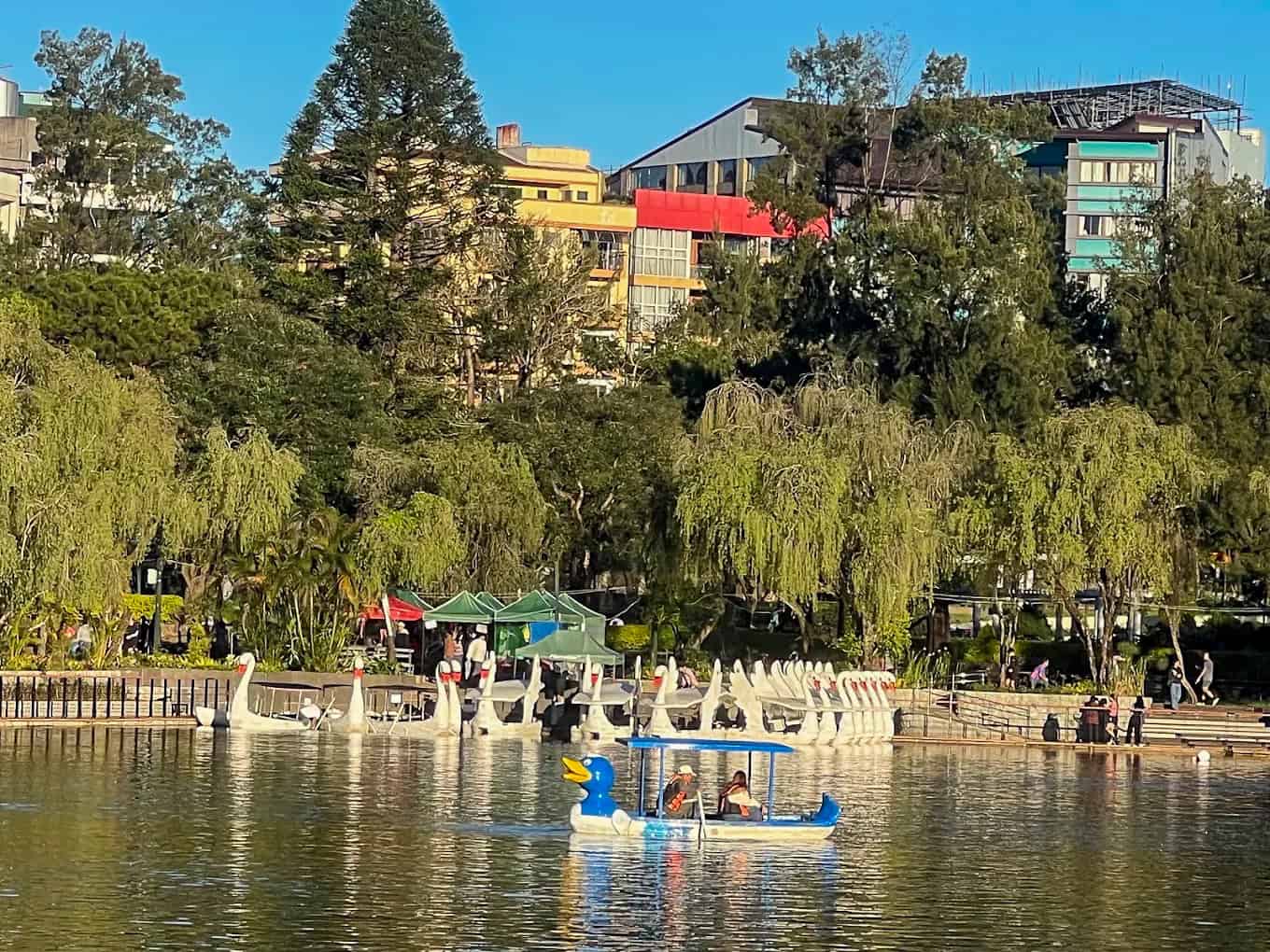
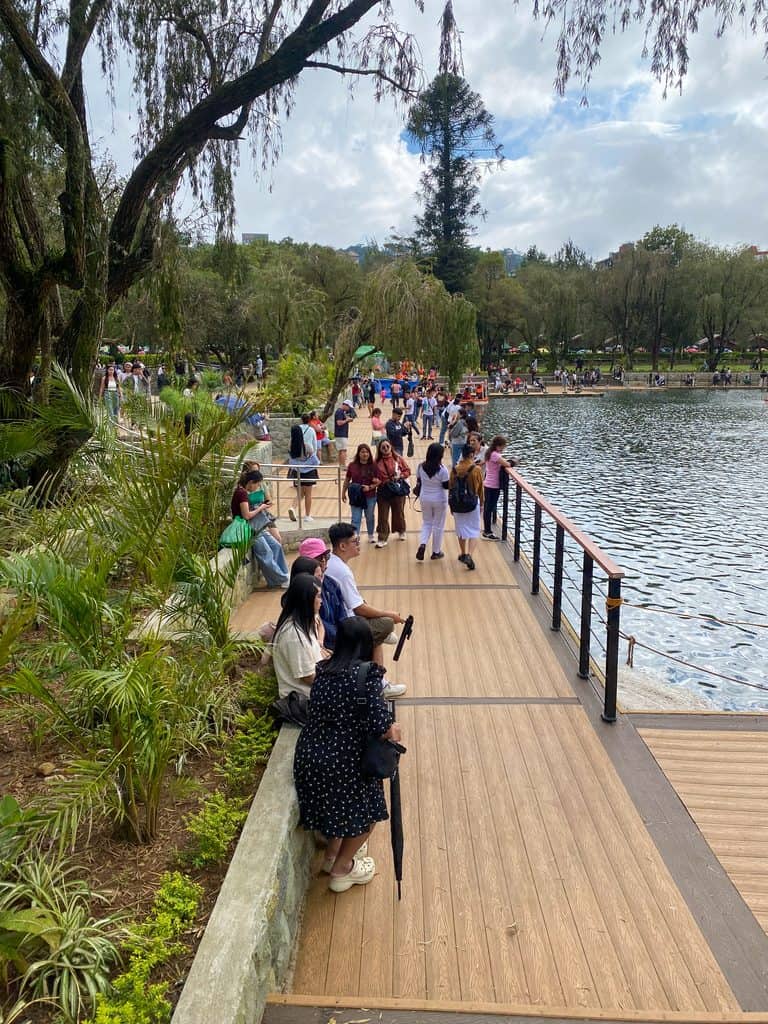
The lake is the main draw, freshly reopened in September 2026 after a 100 million peso rehab. A new walkway loops the shore under weeping willows, and swan and duck boats paddle across the water.
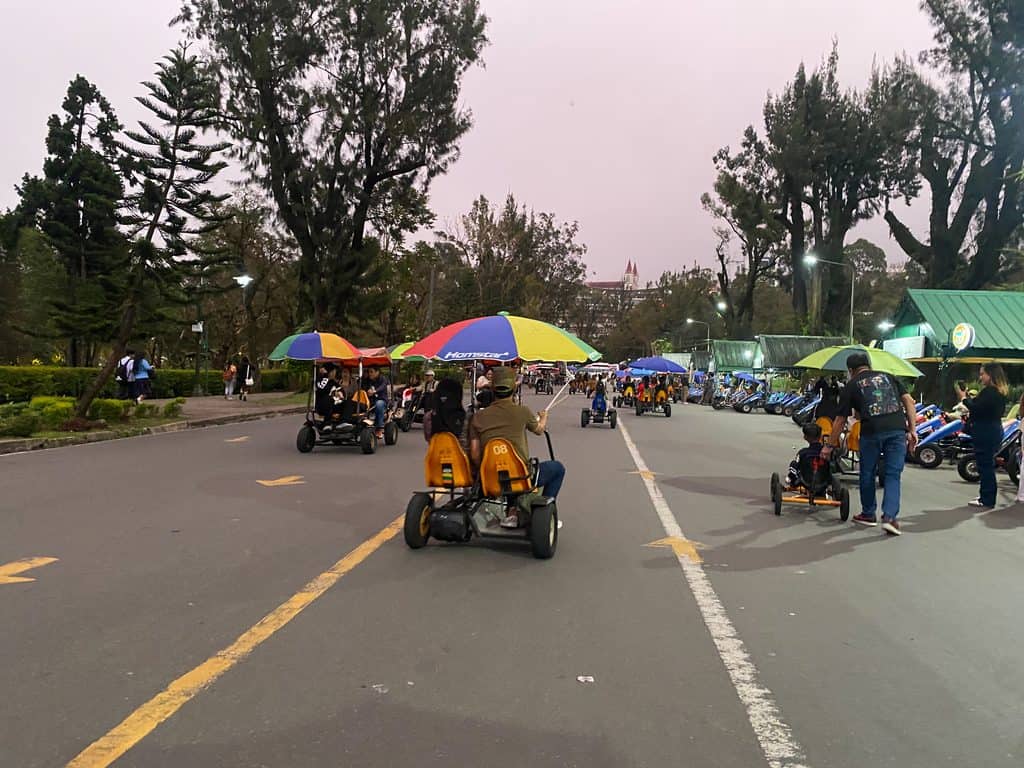
Near the athletic area, a closed-off road is set aside for pedal karts, with small ones for kids and family-size ones that fit three or four people. Look up while you ride, and you’ll see the cathedral spires over the trees.
Away from the lake and the karts, the park splits into 12 sections, from the Rose Garden and skating rink to the Orchidarium and Japanese Peace Tower. Some areas may be fenced off while the Rose Garden and playground rehab finishes.
2. Camp John Hay
Once a rest-and-recreation base for American servicemen, Camp John Hay is now open to everyone. The pine trails and the Cemetery of Negativism are the highlights. The cemetery is a mock graveyard for burying your bad thoughts, and it’s as odd and fun as it sounds.
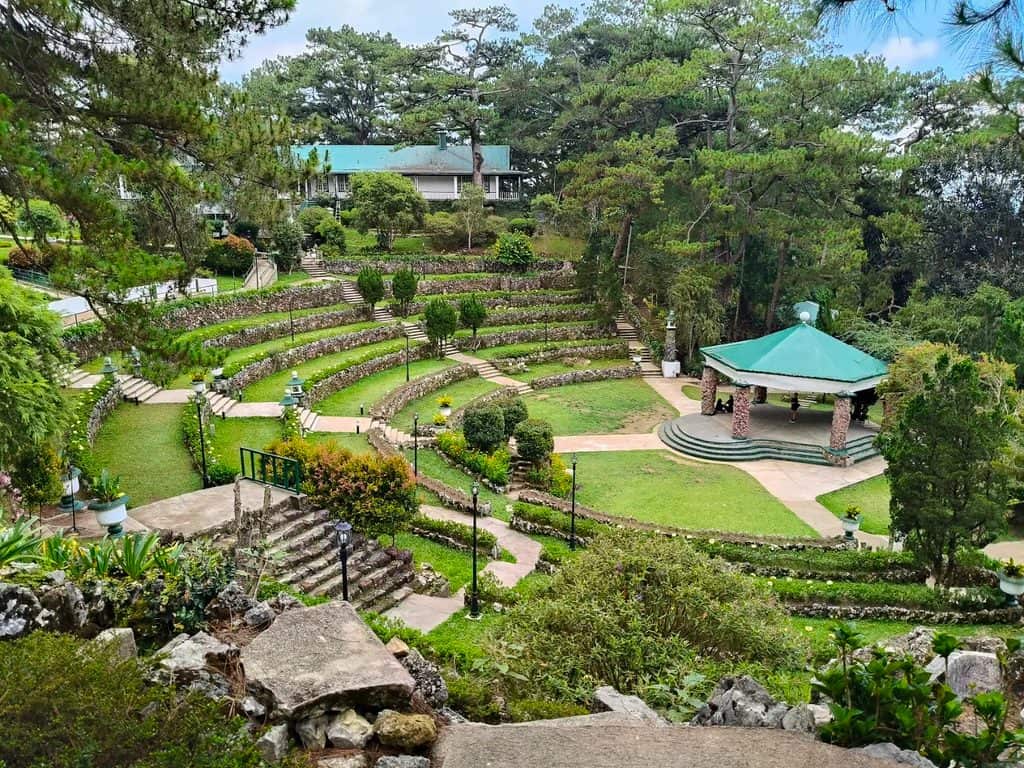
History buffs can head to Bell House and the History Trail. Kids get a great playground, and there’s horseback riding and a butterfly sanctuary if you want more.
3. Mines View Park
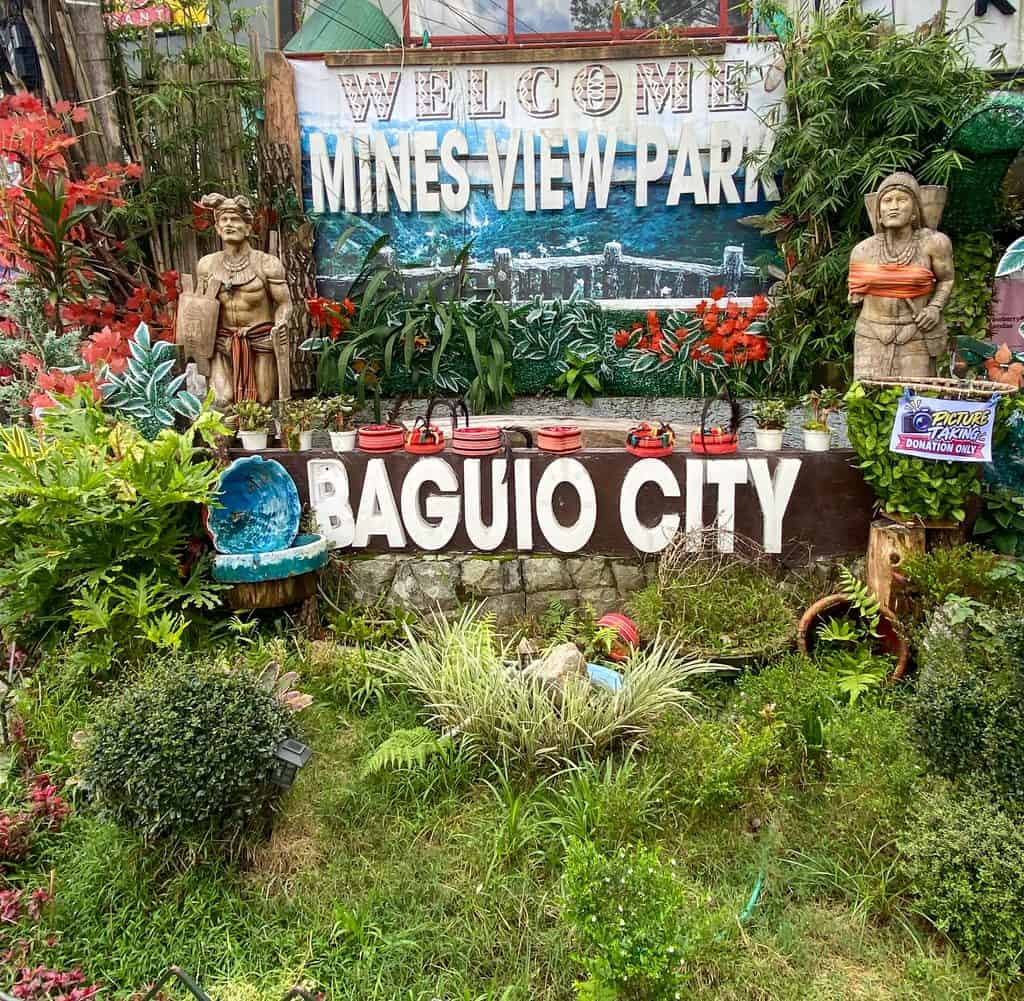
On a clear day, the view from Mines View Park stretches across the Cordillera mountains to the old mining area around Itogon. Pasalubong shops line the way to the viewpoint.
4. Wright Park
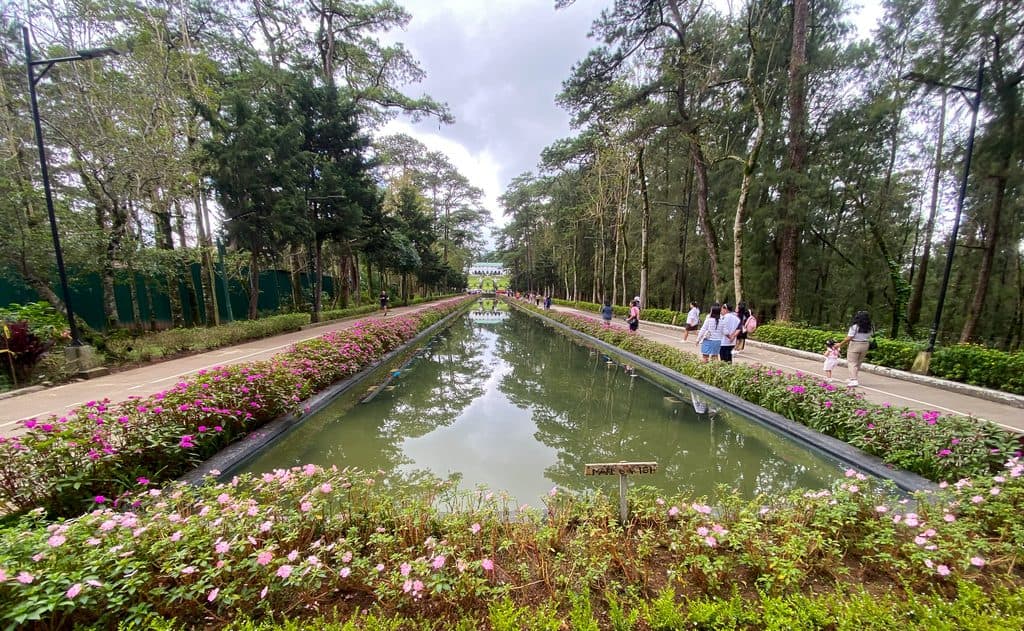
Pink flowerbeds and tall pines line both sides of the Pool of Pines, a long reflecting pool, and the reason most people stop at Wright Park. The pool starts right at the road, and the Mansion, the president’s summer residence, sits just across from it.
Horseback rides run from the stable area beside the park.
5. Baguio Botanical Garden
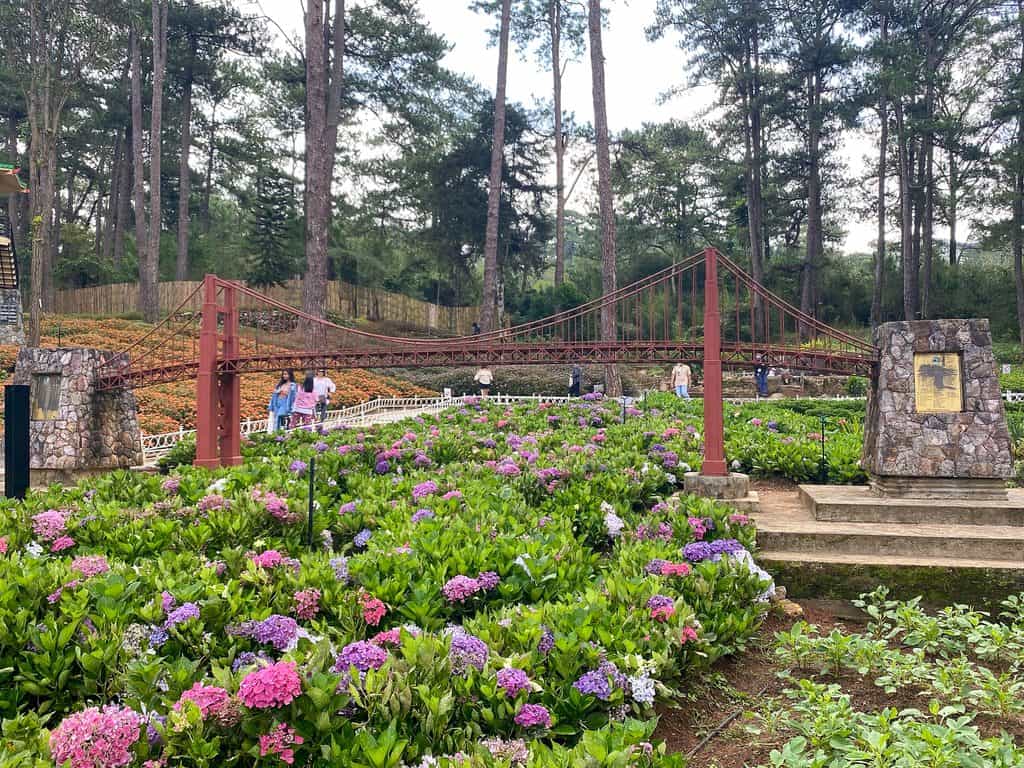
The Baguio Botanical Garden reopened after a renovation, with themed sections including an orchidarium, dahlia and sunflower gardens, and the Cordillera Village, a cluster of huts showcasing regional art.
When we stopped for a photo at the entrance sign, three women in traditional Igorot dress stepped in beside us just before we took it. Afterward, they all held out their hands. Keep some coins ready, or wave them off politely before the camera comes out.
Landmarks, Art, and Culture
6. BenCab Museum
National Artist Benedicto Cabrera, known as BenCab, built this museum around his best-known work, the Sabel series, paintings of a homeless woman who made her clothes from street scraps. The Cordillera Gallery adds carved bulul, the rice granary gods.
Out back, a farm and an eco-trail of traditional huts round out the visit. Finish with coffee at Café Sabel.
7. Tam-awan Village
Wear shoes with grip. The paths at Tam-awan Village include steep stairs that get slippery after rain, winding between Ifugao and Kalinga huts, art galleries, a café, and viewing decks.
Its artists also designed the Stobosa mural in La Trinidad. For a more immersive experience, some huts take overnight guests.
8. Igorot Stone Kingdom
The first look stops most people. Stone walls step up the hillside in curving terraces, modeled on the Batad rice terraces, with pointed towers, arched galleries, and battlements climbing all the way up to the pines. Behind the main plaza, a dark gray fortress rises in tiers, topped with statues of Cordillera warriors.
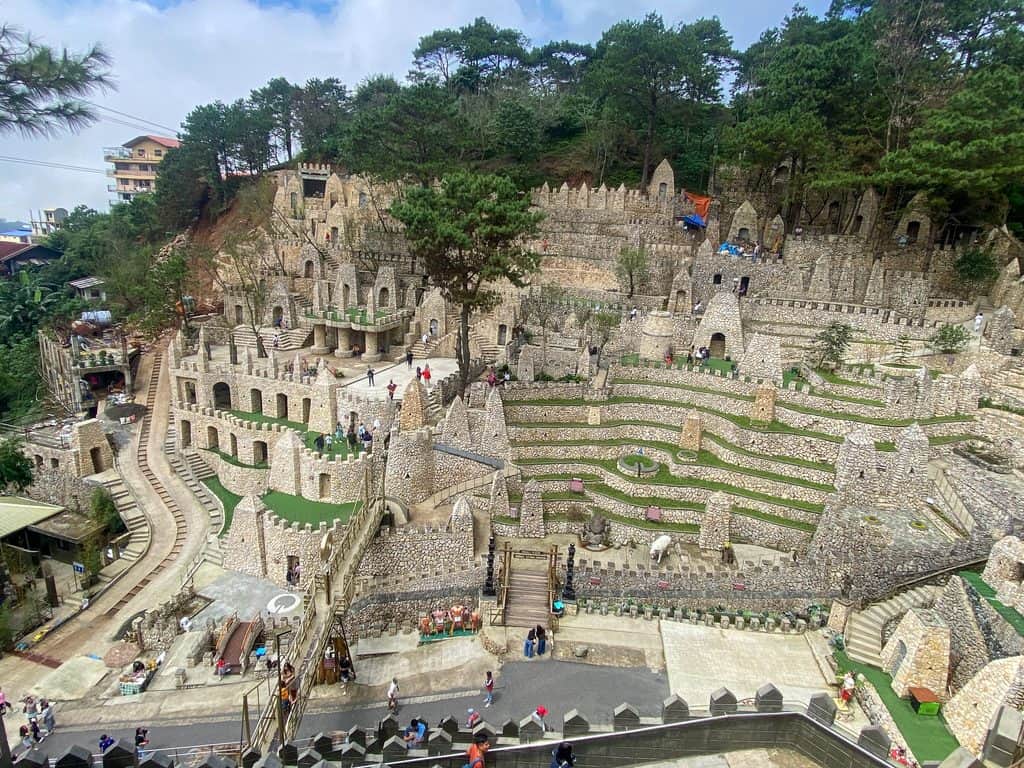
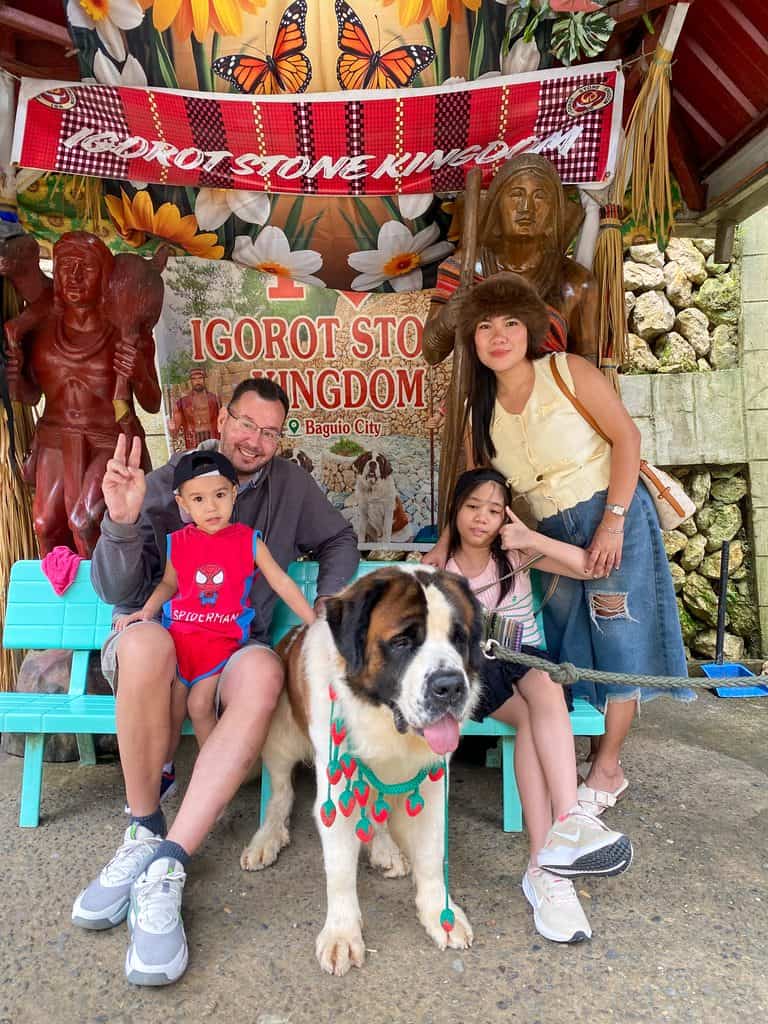
It’s a great family stop, with photo spots around every turn and wide views of the surrounding hills. Near the end, look for the Saint Bernard, who sits on a bench under a small shelter in a crocheted strawberry necklace. You can get a picture with him for a small fee.
Be ready for a lot of steps up and down, and skip it if anyone in your group has mobility issues. Some sections aren’t fenced. Keep kids close.
9. Baguio Cathedral
Baguio Cathedral sits on a hill above Session Road, and most people reach it by a 104-step stone staircase, renovated in 2022. You can also drive up. At the top, a plaza with a large crucifix and statues faces a final set of steps up to the church, lined on both sides by lit, covered walkways.
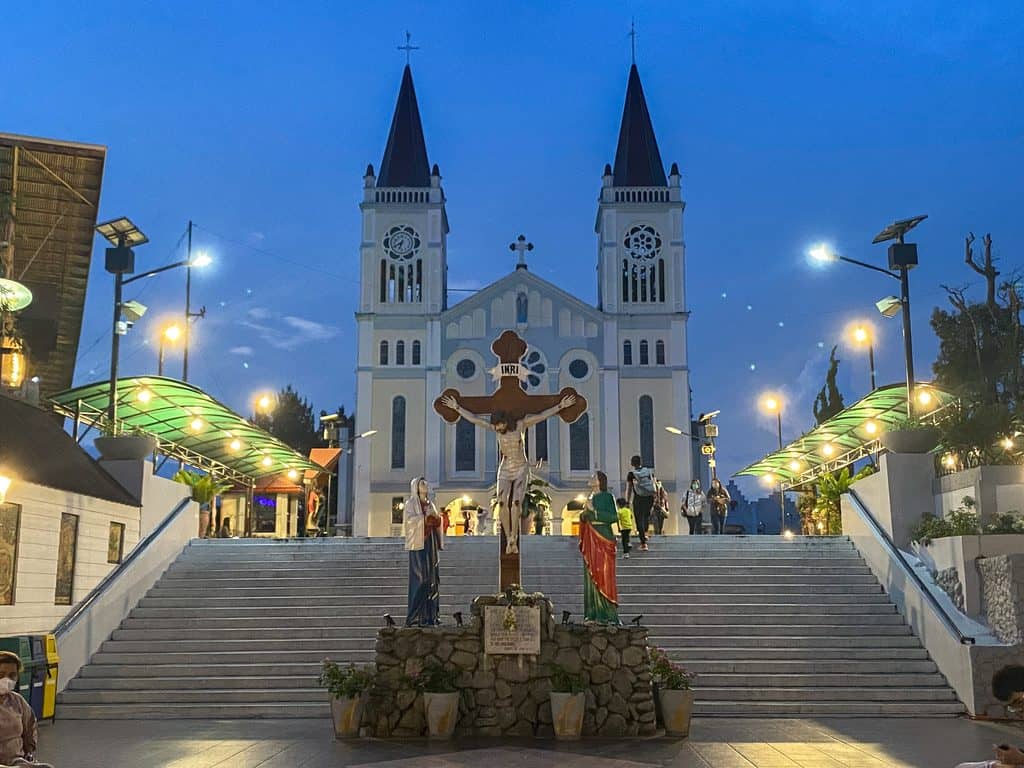
Our Lady of the Atonement Cathedral was consecrated in 1936. It survived the 1945 bombing of the city and sheltered evacuees during the war. Mass is still held here. Dress modestly and keep your voice down.
Come around dusk, when the lights come on, and the twin spires stand out against the evening sky.
Food, Markets, and Local Flavors
10. Baguio City Public Market
This is where Baguio itself does its shopping. Come early in the morning, when it’s busiest and the produce is freshest. Vegetables from the Benguet highlands fill one section, with dried goods and handicrafts in the others.
For pasalubong, jams are the big sellers, especially ube and strawberry, along with peanut brittle. Baguio longganisa and tiger grass brooms are worth grabbing too, and the coffee stalls grind Benguet beans while you wait. Bring cash, compare a few stalls, and bargain politely.
11. Good Shepherd Convent
The shelves go well past ube. There are more than 90 products, including fruit jams, Benguet and Ifugao coffee, and lengua de gato. The Good Shepherd nuns started the business in the 1950s, and the proceeds still fund their work with children and a student-worker program.
12. Baguio Night Market
Eat first, then dig through the thrift racks. One side of Harrison Road closes to traffic at night, with street food at one end and secondhand clothes at the other.
Barbecue and kwek-kwek are the staples, plus a few Korean and Japanese stalls. It opens around 9 PM and runs past midnight. Bring cash, and expect crowds.
13. Ukay-Ukay (Thrift Shopping)
Baguio is often called the ‘ukay-ukay capital of the Philippines’, and the secondhand clothing stalls are everywhere. Start at Hilltop, near the public market, then try the Night Market and Maharlika Livelihood Center. Prices are marked, but a little haggling is fine.
14. Session Road
Session Road is Baguio’s main street, lined with cafés and restaurants, with bookstores tucked between the shops. In late February and early March, Panagbenga takes it over.
The Grand Street Dance Parade and the Grand Floral Float Parade run on back-to-back days, and a week-long street fair called Session Road in Bloom follows.
On Sundays, the uphill side has traditionally been closed to cars for Sunday Session, a walking street with cosplayers, chalk art, and food and craft bazaars. It was paused over downtown traffic concerns, so check whether it’s running before you plan around it.
Side Trip to La Trinidad
La Trinidad is in Benguet, just outside Baguio. The strawberry farms are the main draw, and Bell Church and Stobosa fit into the same half-day outing.
15. Strawberry Farms
It’s worth the trip. The farms are working fields, with a lane of souvenir shops beside them and vendors selling strawberry taho and ice cream. You can buy a few boxes from the stalls or pick your own in the field.
Timing matters. The season runs from about November to June and peaks in March and April. Picking costs about 500 to 800 pesos per kilo, while stall strawberries cost less, and there’s no entrance fee.
16. Bell Church
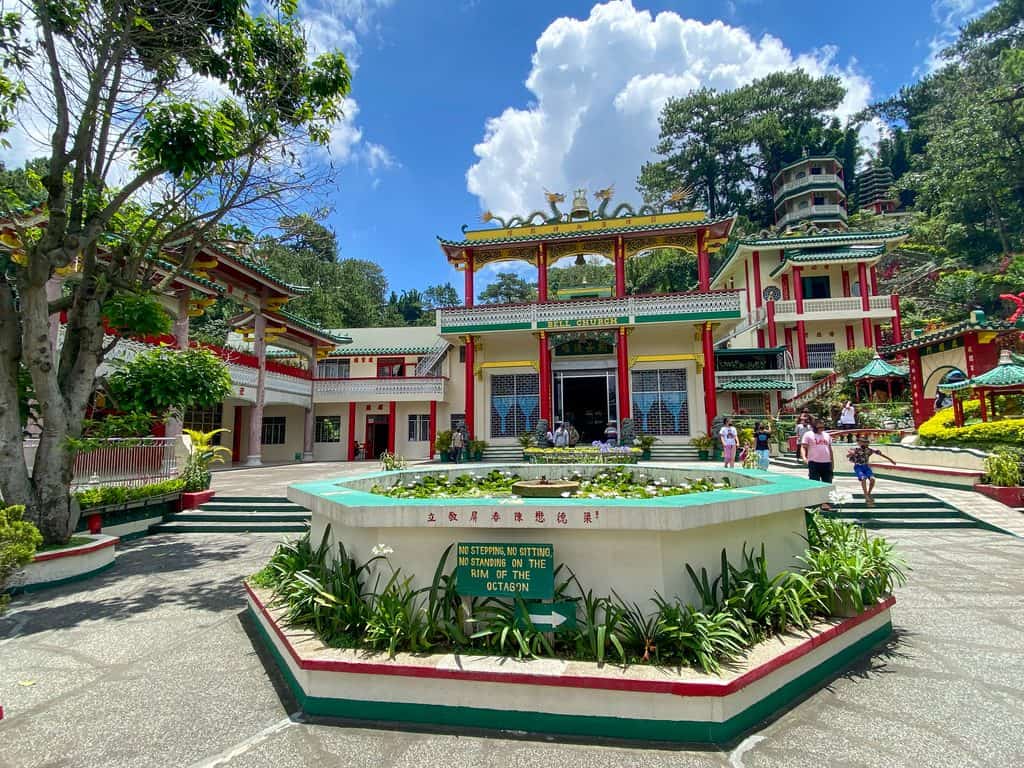
A dragon-covered arch marks the entrance, and past it the Chinese temple complex climbs a hill, with a pagoda and lotus ponds among the gardens. It was founded in 1960 by a Chinese Filipino religious group that blends Taoism, Buddhism, and Confucianism, along with elements of other faiths.
17. Stobosa Hillside Homes
In 2016, residents and volunteers painted about 180 hillside houses as one giant mural, with sunflowers as the main motif.
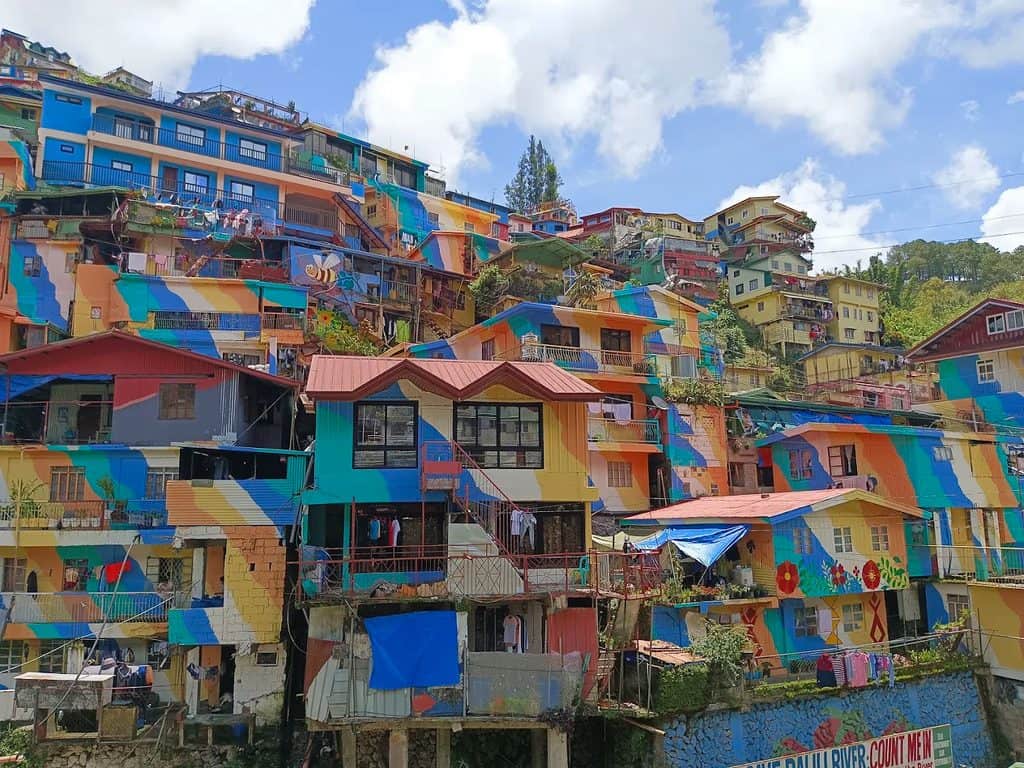
Walk the footpaths between the houses to see the walls up close, and cross the footbridge over the creek. For the full picture, cross the road and look back at the whole hillside against the mountains. Bell Church is a short walk away.
Honorable Mentions
18. SM City Baguio
Go to the upper floors for views over the city and the mountains. Several open-air sections face out, and a number of restaurants there have outdoor seating with the same view.
19. Sky Ranch Baguio
Next to SM, Sky Ranch is a small amusement park. The Baguio Eye Ferris wheel is the main ride, and it’s at its best around dusk, when it lights up. A few thrill rides and kids’ rides fill out the rest.
20. Lion’s Head, Kennon Road
The Lion’s Head is a 40-foot limestone lion carved in 1972 beside Kennon Road, the winding road between Baguio and the lowlands. It’s kitschy and a little strange, which is exactly why people stop.
21. Bridal Veil Falls
The falls are tall and narrow, and strongest in the rainy season. By December, they can shrink to a trickle. A hanging footbridge leads to a viewing deck, but if it’s closed, you will see the falls from the road.
Parking is tight. Check road conditions before you go, because Kennon Road is prone to landslides in heavy rain.
22. Uncle Sam’s Agri-Tourism Park
Kids tend to love this one. Cement dinosaurs, dragons, and lizards cling to giant boulders across the hillside, and some are big enough to walk inside. Stairs and narrow paths wind over, around, and under the rocks, so it plays more like a scramble than a stroll.
Beyond Baguio
These three are farther out, so plan a full day or more for each.
23. Mt. Ulap
Mt. Ulap is a day hike up to 1,846 meters. Guides are required, and the trail takes 3 to 6 hours depending on your pace. Start early for the sea of clouds and hike to Gungal Rock, the photo spot. Weekends get crowded. For a shorter hike, try Mt. Yangbew in La Trinidad.
24. Mt. Pulag
At about 2,922 meters, Mt. Pulag is the highest peak on Luzon Island, and its summit marks where Benguet, Ifugao, and Nueva Vizcaya meet in the Cordillera Central. Most hikers start on the Ambangeg trail in Bokod. It’s known for its sea of clouds.
Getting there from Baguio takes about 3 to 4 hours each way, and the hike itself runs 3 to 6 hours depending on your pace. A same-day round trip is hard. Plan an overnight stay or a very early start.
25. Northern Blossom Flower Farm
Cabbage roses, hydrangeas, and snapdragons fill the fields at Northern Blossom Flower Farm in Atok. It’s about a two-hour drive from Baguio, or you can take a bus and ask to be dropped off at Atok Municipal Hall. Bring layers. It’s chilly up there.
Two quick stops are nearby: Atok Sakura Park, a free park with cherry trees that bloom from late March to April, and the Halsema Half Tunnel, a stretch of the highway cut through the rock. Stopping for photos at the tunnel is risky because of the sharp curves.
Best Time to Visit Baguio
The best time to visit is November through April, when it’s drier and the skies are clearer. Days are in the low to mid 20s °C (about 70 to 77°F), and nights drop to around 9 to 12°C (48 to 54°F). December through February is the coldest stretch.
December is also the busiest month, with holiday crowds, while November is the quietest of the dry months. Panagbenga, the flower festival, fills the city in late February and early March.
From June to October, expect rain most days, with typhoons possible from July through September. Heavy rain can make the mountain roads rough, so check the forecast before you go.
Whatever the month, pack layers. Baguio is one of the few places in the Philippines where you’ll trade slippers for socks.
Getting to Baguio from Manila and Clark
The expressways do most of the work. TPLEX ends at Rosario in La Union, and the last stretch is a mountain road.
| Route | Estimated time | Cost (PHP) |
| Clark/Angeles by car | About 2.5 to 3 hours | Approx. 550 in tolls, plus fuel |
| Clark/Angeles by bus (Dau) | About 3 to 4.5 hours | 400 to 450 |
| Manila by car | About 4 to 5 hours | Approx. 980 in tolls, plus fuel |
| Manila by bus | About 4 to 6 hours, traffic-dependent | 480 to 750 |
From Manila, it’s NLEX to SCTEX, then TPLEX to Rosario and Marcos Highway up the mountain, about 4 to 5 hours without heavy traffic. By bus, Victory Liner and Genesis run frequent trips from their Cubao and Pasay terminals, and the ride takes about 4 to 6 hours.
Always check with the bus company in advance because bus schedules are subject to change.
Marcos Highway is the most reliable climb. Kennon Road is shorter and more scenic, but it’s narrow and often closes after heavy rain.
By bus from Clark, Victory Liner and Genesis run the route from the Dau terminal in Mabalacat. Schedules change often, so check before you go.
How to Get Around Baguio
Baguio is hilly, and the traffic is heavy. Park your car and use jeepneys and taxis. We did, and it worked.
Jeepneys
Jeepneys are the cheapest option. We paid 18 pesos from our house to SM City Baguio. Each one has its route written on it, so check that before you board. Pay with exact change if you can, or at least nothing bigger than a 100-peso bill. They run from about 5 AM to 10 or 11 PM.
You don’t need a terminal. Hail one from the street as it drives by. The main hubs are around the public market and Burnham Park. Jeepneys to Mines View leave from near Mabini Street, jeepneys to Asin (for BenCab) leave from the public market, and the Tam-awan and Long-long jeepneys leave from Kayang Street.
Taxis and Grab
Taxis are metered. As of October 2026, the flag-down rate is 65 pesos, and a ride from our house into town runs 120 to 150 pesos. Taxi stands are at malls, hotels, and bus terminals. Take one at night, in rain or fog, or when you’re heading to a far stop. They’re in high demand in the rain.
Grab works, but it costs more. The same trip was about 280 pesos, nearly double the taxi.
Walking
Burnham Park, the public market, Session Road, and the cathedral make an easy central circuit, but expect steep streets. Wright Park, the Botanical Garden, and The Mansion are also close enough to walk between.
An exciting and unusual thing about Baguio is that there are actually proper sidewalks there. If you have spent any time in the Philippines, you know how rare that is because sidewalks are generally nonexistent.
Getting to La Trinidad
La Trinidad jeepneys line up at the terminal on Magsaysay Avenue beside Baguio Center Mall, near the public market. Look for “La Trinidad” on the signboard, or ask anyone there which one goes your way. Tell the driver your stop when you board.
For the Strawberry Farm, you get off just past the Benguet State University oval and walk a short way. To get back, flag any Baguio-bound jeepney on the same road.
A taxi is the easiest way there and back, and it’s worth the extra cost if you’re hauling pasalubong or traveling with kids. Expect around 200 to 250 from Session Road to the Strawberry Farm. Grab works too, but it usually runs a bit higher than a metered taxi.
How Many Days You Need
Plan on 1.5 to 2 days for a first visit. Most places need about an hour, which works out to five or six stops in a full day. If you’re heading home on a Sunday afternoon or evening, leave room for weekend traffic.
A few stops take longer. Exploring all of Tam-awan Village can take two to three hours, and Wright Park stretches out if you ride a horse. Stobosa takes about 30 minutes.
Group your stops by area, not by the order in this list:
- Downtown: Burnham Park, Session Road, the Public Market, ukay-ukay at Hilltop, Baguio Cathedral, SM City Baguio, Sky Ranch, and the Night Market after dark
- East side: Botanical Garden, Wright Park, Mines View, and Good Shepherd
- Camp John Hay: big enough to count as a stop of its own
- Pinsao and Long-long Road: Tam-awan Village and Igorot Stone Kingdom
- Asin Road: BenCab Museum and Uncle Sam’s
- La Trinidad: Stobosa, Bell Church, and the strawberry farms
- Kennon Road: Lion’s Head and Bridal Veil Falls, if you’re coming in or leaving that way
| Time in Baguio | What to cover |
| 1.5 days | Downtown and the east side on day one, then Pinsao the next morning before you head home |
| 2 days | Add Camp John Hay and Asin Road |
| 3+ days | Add the La Trinidad side trip and a slower pace |
Nobody needs to see all 25 in one trip, unless you REALLY want to, of course. At five or six stops a day, that’s four or five days of nonstop sightseeing.
Coming from Angeles City or Manila? A day trip from Angeles City works if you leave early and accept a long day behind the wheel. From Manila, it’s possible but grueling: leave by 4 or 5 AM, get a few hours in Baguio, and head back around 6 or 7 PM.
Either way, staying overnight is the better call. You’ll see more, and you won’t be heading down the mountain tired after a full day of driving in and around Baguio.
Where to Stay in Baguio
Where you stay depends on how you plan to get around. Central Baguio is walkable, while the quieter areas mean a taxi or jeepney ride for most trips.
Session Road, Burnham Park, and Governor Pack Road make the best base for a first visit. The park, the public and night markets, Session Road, and the cathedral are all within walking distance, and you’ll only need a taxi for the east side.
The trade-off is road noise and steep streets. We stayed in an Airbnb condo just a four- or five-minute walk from Burnham Park, which made it easy to head out on foot.
Legarda Road and Kisad Road sit in the middle. You’re close to downtown, but not an easy walk to Session Road, and traffic builds at the junctions.
Leonard Wood Road, Teachers Camp, and Outlook Drive put you near the Botanical Garden and Mines View, though a trip to Session Road or Burnham Park means a 10-15 minute ride.
Camp John Hay and Scout Barrio are quieter and surrounded by pines. Pick them if peaceful mornings matter more than easy access to the market and the evening crowds, and budget more for taxis.
A house outside the center is another option, especially for families or groups. We also stayed in one, which was 10 to 15 minutes by taxi or jeepney from Session Road. It gives us more space, but every trip into town needed a ride.
If you drive, filter for parking. Both of our places had it, which let us park the car and use jeepneys and taxis. You should definitely book early for December and Panagbenga, the two busiest times of the year.
Frequently Asked Questions
How many days do you need in Baguio?
Plan on 1.5 to 2 days for a first visit. Most places take about an hour, which leaves room for five or six stops a day. If you’re heading home on Sunday, leave extra time for weekend traffic.
Is Baguio safe for tourists?
Yes. The city is clean, you can walk pretty much anywhere at night, and drivers are generally courteous to pedestrians. Crowded spots like the Night Market and Mines View call for the usual care with your phone and wallet.
What is Baguio known for?
Cool mountain weather, which earned it the nickname Summer Capital of the Philippines. It’s also known for pine trees, strawberries from neighboring La Trinidad, the Panagbenga flower festival, ukay-ukay thrift shopping, and Good Shepherd ube jam.
Do you need a car in Baguio?
Not inside the city. Jeepneys and taxis cover most stops cheaply, and parking is a hassle. Grab works but usually costs more than a metered taxi. A car helps for outer stops like Tam-awan, BenCab, and La Trinidad.
What are free things to do in Baguio?
Burnham Park, Session Road, the Public Market, and the Night Market cost nothing to explore. In La Trinidad, Stobosa is free, and the strawberry farm has no entrance fee, though picking costs extra.
What’s the best time to visit Baguio?
November through April, when it’s drier. December through February is the coldest stretch. Try to avoid July to September, the peak of typhoon season. Panagbenga brings the biggest crowds of the year in February and March.
Is Baguio worth visiting?
Absolutely! It’s an easy escape from the lowland heat, with perfect weather, clean streets, friendly people, and plenty to do. The only real downsides are weekend crowds and traffic, and a little planning gets you around both.
It’s a Wrap
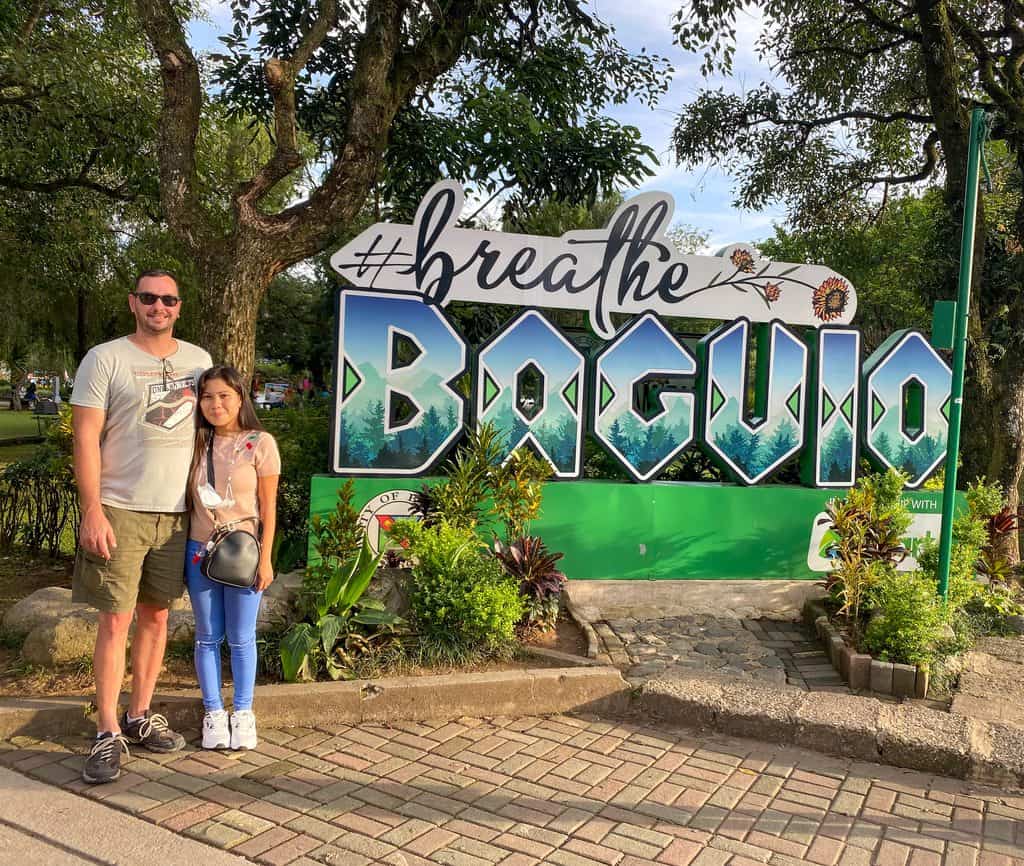
Don’t rush Baguio. Pick a few areas, give each stop an hour, and leave time to wander Burnham Park and Session Road. You don’t need to see all 25 to understand why people keep coming back.
Bring a jacket, avoid the Sunday evening drive down if you’re there on a weekend, and don’t leave without a jar of ube jam or a box of strawberries.
