Angeles City Itinerary: Spend 1, 2, or 3 Days Like a Local

Search “Angeles City itinerary” and half the results are for Los Angeles. Most of the rest were written by sites that have never set foot in Pampanga.
That is the state of the advice out there for a city I have called home for years.
Angeles deserves better.
People treat it as a place you pass through on the way to somewhere else, an airport with a nightlife strip attached. They land at Clark, grab a ride, and leave.
They miss the birthplace of sisig, a heritage church just elevated to a minor basilica, and a world-class volcano hike an hour up the road. The nightlife is here too, and it’s some of the best in the region, but that’s the part everyone already knows.
This post is about the rest.
This is the itinerary I would hand a friend flying in. Pick one, two, or three days, depending on what you have.
Each plan builds on the last, so take what fits and skip the rest.
How to Spend 1, 2, or 3 Days in Angeles City
Each plan below builds on the one before it. Day 1 covers the essentials, Day 2 adds a day trip, and Day 3 goes deeper into the local side.
Pick the length that fits your trip and take what you want from the rest.
Day 1: The Essentials
Day one runs through three parts of the city: the Historic District in the morning, the Clark Freeport Zone in the afternoon, and Balibago in the evening. One full day is enough to hit the church, the museums, the sisig, and Clark, without feeling rushed.
Morning: The Historic District
Start at Holy Rosary Parish Church, known locally as Pisamban Maragul. Founded in 1877, it was elevated to a minor basilica by Pope Leo XIV in January 2026, a rare distinction the Vatican grants to churches of special historical and spiritual significance.
It’s the first in Pampanga and only the 30th in the Philippines.
It’s a fresh honor: a year ago, this was simply the old mother church, and the formal proclamation rites took place on June 10, 2026. It still anchors the morning.
Lunch: Aling Lucing’s
This is where modern sisig was born. Lucia Cunanan, the woman everyone knew as Aling Lucing, opened the stall in 1974 right by the old Clark Air Base, grilling pig head parts the base kitchens had thrown out. She chopped, seasoned, and sizzled them into the dish that now appears on menus nationwide, earning her the title Sisig Queen.
Anthony Bourdain ate here and put it in front of a global audience, calling sisig a “sweet symphony of pig parts.” It was reportedly where his love of Filipino food began. You are not eating sisig for the novelty; you are eating it at the source.
My order is simple: sizzling sisig and rice, every time. The one downtown is my favorite branch. It’s the original, and the one worth eating at.
If you’re making a meal of it, the lechon kawali and the bulalo both hold up.
And if you want to eat like a local who’s stopped flinching, order the chicken ass, yes, that’s the actual name.
And yes, it’s better than it sounds.
Afternoon: Clark Freeport Zone
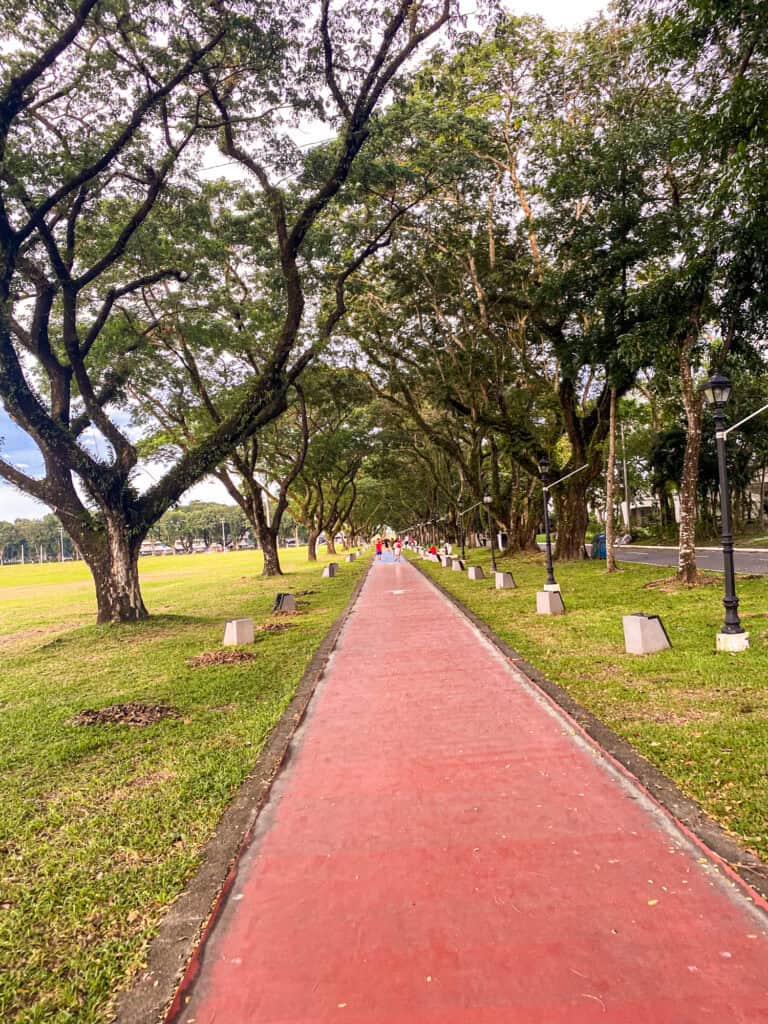
Clark is a different city in feel, wide and orderly, where the old core is dense. Start at the Clark Museum for the airbase history, then walk the Clark Parade Grounds and stop at the Salakot Arch, the landmark gate most people photograph on the way through.
Traveling with kids? Aqua Planet, the area’s water park, can eat a whole afternoon on its own, so decide early whether Clark is a quick loop or the day’s main event.
Evening: Balibago
Most dinners end up back toward Balibago, where the restaurant density is highest, and the nightlife is abundant.
My three favorites are: Fragrant Thai, the best Thai food in town, and an easy distance from Balibago; Tequila Reef, which pours the best margaritas you’ll find here; and Kokomo’s on Fields Avenue if you want to be smack dab in the middle of the night.
One honest note before you wander. Fields Avenue is the city’s red-light district, a strip of go-go bars, clubs, and the kind of nightlife Angeles built its overseas reputation on.
It’s not hidden, and it’s not dangerous to walk, but it’s also not subtle, so if you’re here with family or it’s just not your scene, base yourself on the Clark or Malabanias side, and you can skip it entirely.
For the full picture, here’s my honest take on whether Angeles City is safe.
Day 2: The Big Day Trip
Day 2 is a choose-your-level day. Mount Pinatubo is the headline, but it is not the right call for everyone, so pick the tier that fits your energy and mobility instead of defaulting to the famous hike.
There is a version of this day for the hard chargers, another for most travelers, and a third for anyone who just wants to relax.
Here’s what most Pinatubo guides won’t tell you, because the hike gets the clicks: it’s not for everyone, and that’s fine. With young kids, bad knees, no time, or no appetite for a hot, dusty trek, skip it without guilt.
Puning Hot Spring gives the same 4×4 ride with a soft landing, and the easy day below asks nothing at all.
The big adventure: Mount Pinatubo
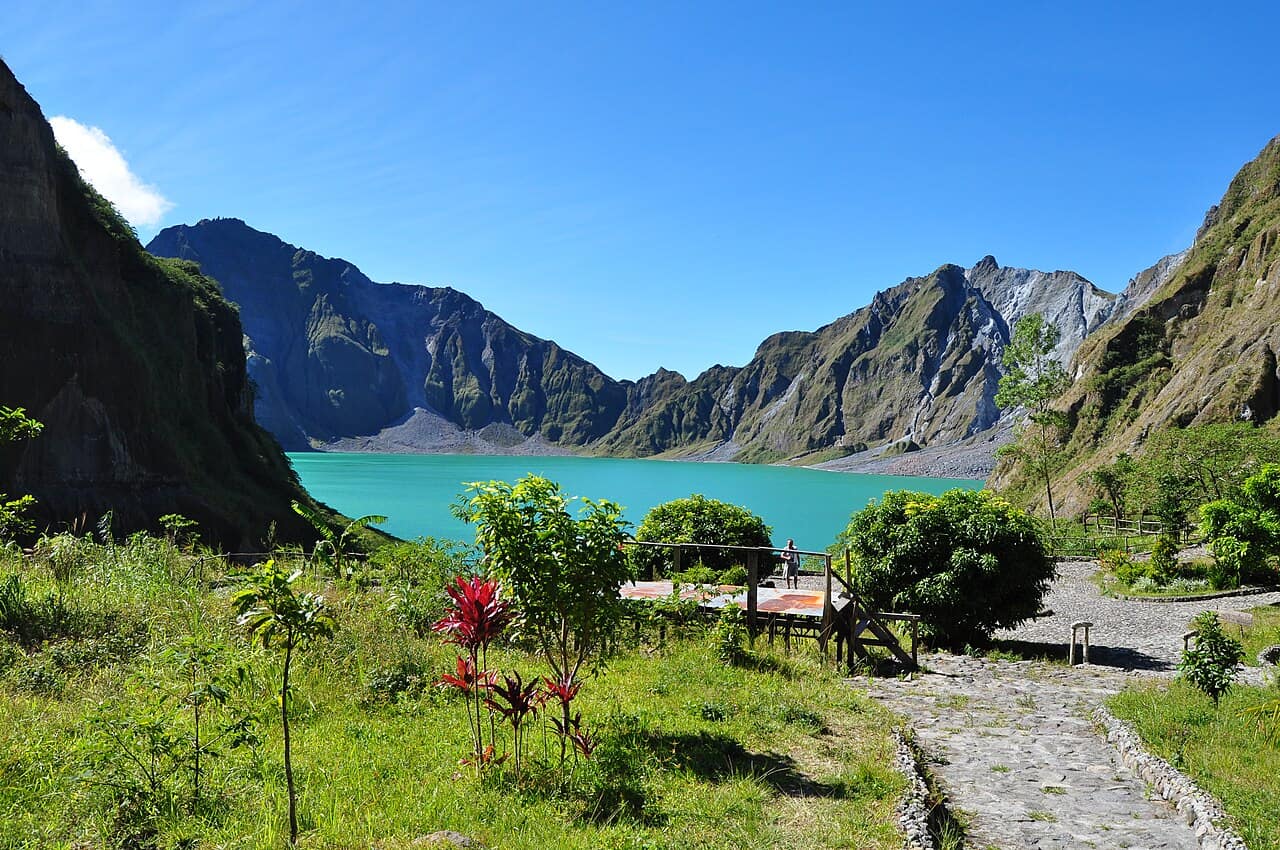
This is the one people fly in for. You ride a 4×4 across the lahar fields (volcanic debris) left by the 1991 eruption, then hike the rest of the way to the crater lake sitting in the blown-out caldera. Early start, dusty trail, a payoff that earns every bit of the effort.
Be honest with yourself about what it asks. The trek is not technical, but it is hot, long, and loose lahar underfoot, so it is not the day for young kids, limited mobility, or anyone after a relaxed outing. Going in clear-eyed is the difference between a great day and a miserable one.
Logistics: tours run from the Santa Juliana jump-off in Capas, Tarlac, and most people book transport and a guide rather than going it alone.
The middle option: Puning Hot Spring
For most travelers, this is the smart pivot. You still get the 4×4-through-the-lahar experience and the Pinatubo-area scenery, but the day ends at hot springs and a sand spa instead of a summit push. It feels like an adventure without demanding one.
The springs are in Barangay Inararo, Porac, but you reach them by 4×4 from Sapang Bato in Angeles City, where the ride begins. Far more accessible than the crater hike, and an easier sell if your group’s energy is mixed.
The easy day: Subic, Clark, Arayat, or Goshen
Want a day with no exertion at all? Point yourself at Subic Bay for beach time, seafood, and light activities, or just stay close with a relaxed loop around Clark. No 4×4, no trail, no early alarm.
My own low-key pick is Goshen, a resort about 30 minutes out in the Tarlac foothills at Bamban. The Roman-inspired grounds and pools make it an easy way to spend a few hours or a whole lazy day, and on a weekday, it rarely feels crowded.
Hikers who want a climb closer than Pinatubo have Mount Arayat instead, a solid half-day that keeps you in Pampanga.
For the complete list of escapes, see my guide to the best day trips from Angeles City.
Day 3: Deeper Local
Three days in, you’ve done the headline sights. Day 3 is the one most visitors never reach, the day you eat, move, and slow down like someone who actually lives here rather than someone working a checklist.
Eat like a Kapampangan
Pampanga is the country’s culinary capital, and Angeles wears the official title “Sisig Capital of the Philippines.” But sisig is the door, not the room. The real Kapampangan food scene lives in the public markets and the carinderias, the small family eateries where the menu is whatever was cooked that morning, and the best dishes never make it onto a tourist list.
Go where the locals eat. Wander a public market in the late morning, point at what looks good, and order the thing you can’t name. That’s the version of Kapampangan cooking the guidebooks miss, and it costs less than the sisig you came for.
Get outside
If you’d rather burn the calories than just eat them, Pampanga has more terrain than its flat-province reputation lets on.
Sandbox at Alviera in Porac is the easy, family-friendly pick: a giant swing, a ropes course, and a zip line, no trekking required.
For the adventurous, two waterfalls are worth the effort, and both come with real access rules, so plan ahead. Miyamit Falls sits in Porac and requires a signed waiver from the Porac Municipal Hall before you trek in.
Haduan Falls is in Mabalacat, not Porac, reached through Gate 14 of the Clark Freeport Zone, and it requires a waiver you get at the CDC office, plus an Aeta guide who knows the river crossings.
Neither is a casual stroll; Haduan in particular runs a couple of hours through a rocky riverbed, so treat both as a half-day commitment with proper footwear and plenty of water.
Slow down
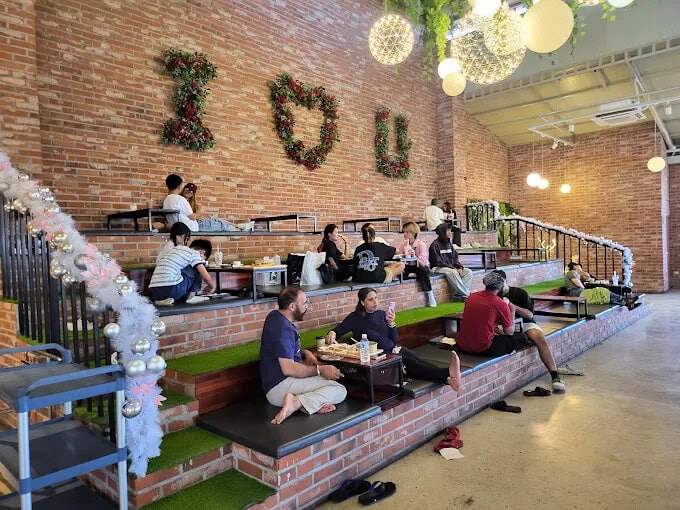
End the trip the way the city actually unwinds. Angeles has a real cafe scene now, and a slow afternoon over good coffee in a quiet corner of Clark is a fitting last note before you head out.
No agenda, no 4×4, just the version of the place that doesn’t show up on a one-day itinerary.
Learn more about my favorite cafes in Angeles City.
Where Angeles City is and how to get around
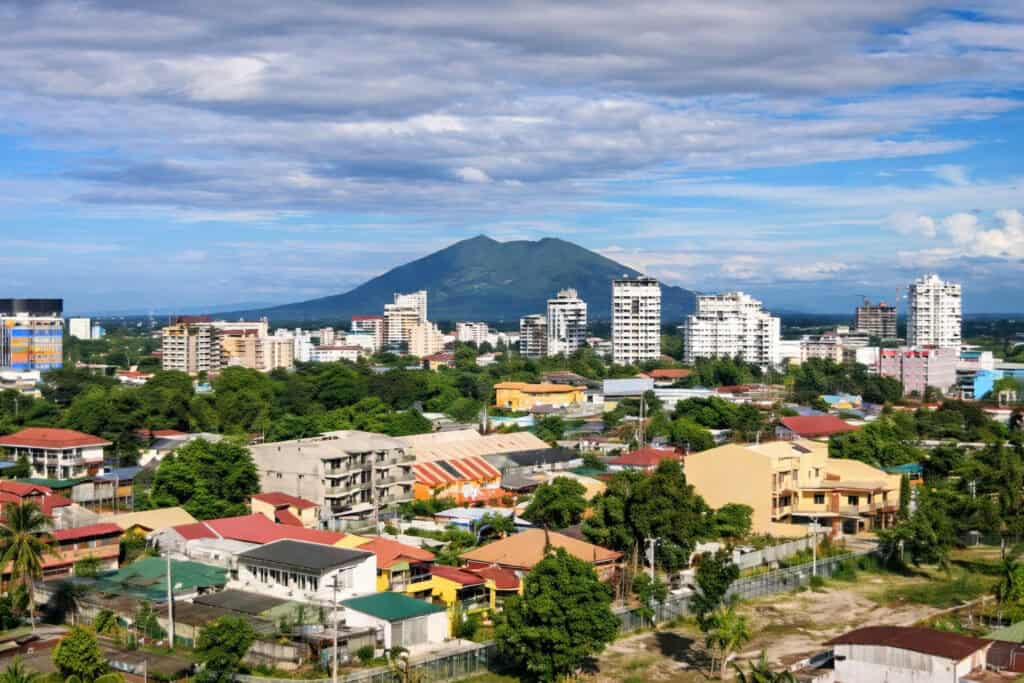
Angeles City sits in Pampanga, in the Central Luzon region, about 80 kilometers northwest of Manila. It’s anchored by Clark International Airport, which makes it one of the easier major destinations in the country to reach without ever touching Manila traffic.
Getting there
If you’re flying in, Clark International Airport (CRK) sits right inside the Clark Freeport Zone, minutes from the city. For a lot of travelers, that’s the whole pitch: land at Clark, skip Manila entirely, and you’re at your hotel inside half an hour.
Coming from Manila by road, you take the NLEX and then the SCTEX and exit around Dau in Mabalacat. In light traffic, it’s roughly a two-hour drive, but the NLEX backs up, so give yourself a buffer if you’re on a schedule.
No car? Buses run constantly from Manila terminals up to Dau and SM Clark, with Genesis and Victory Liner among the main operators on the route. From the drop-off, a jeepney or tricycle gets you the rest of the way in.
Getting around
Start with Grab, a rideshare app similar to Uber and Lyft. It runs well here, and cars usually turn up fast. So, for most visitors, it’s the low-stress default for moving around the city and into Clark.
Both GrabCar and GrabTrike operate, and skipping the fare haggling is worth a lot when you don’t yet know what a ride should cost.
Metered blue taxis are the other easy pick, popular in Clark and around Angeles, and the one to reach for when you’d rather watch a meter than agree on a price up front.
For short hops into subdivisions and side streets, tricycles are everywhere and cheap. One rule to know: they’re not allowed inside the Clark Freeport Zone, so a trike can only take you as far as the Main Gate and the other gate entrances, where you switch to a jeepney for anything inside.
Jeepneys are the local backbone and the cheapest way to travel, but they’re not really a first-timer’s tool unless you’re up for the adventure, since the routes aren’t signposted in a way a visitor can read on the fly.
One quirk to know: the jeepneys running inside Clark are a separate set from the city ones, picked up at the Main Gate terminal rather than hailed on the street.
If you’re game, they’re a fun way to get around; if not, Grab or a blue taxi gets you there with zero guesswork.
Where to stay in Angeles City
Where you stay in Angeles City comes down to one choice: quiet or central. The Clark and Malabanias side is calmer and better for families, while Balibago puts you in the middle of the restaurants and nightlife. Pick the area first, then the hotel.
The quieter side: Clark and Malabanias
Traveling with kids, after a pool-and-resort feel, or want your evenings calm?
Base yourself around Clark or Malabanias. Clark’s hotels sit inside the Freeport Zone, close to the airport and the parade grounds, with the orderly, green, low-noise feel the zone is known for.
Malabanias, right next door, is residential and easygoing. It keeps you near everything without putting the bars on your doorstep, which is the whole appeal for a lot of repeat visitors.
The central side: Balibago
Balibago is where the city stays up the latest. You’re within walking distance of the densest cluster of restaurants and bars, which is the draw for some travelers and the reason others book elsewhere, since this is also where Fields Avenue sits.
If you want to step out of your hotel straight into the action, this is your spot; if you’re bringing the family, read the honest area note up in Day 1 first.
Picks by budget
Four places I’d point you to: three on the quieter Clark and Malabanias side, plus one for travelers who want to be central. Tap through any pick for current rates and availability.
Best Resort: Hilton Clark Sun Valley Resort. If you want the trip to feel like a getaway and not just a base, this is the splurge. It’s the resort-style option where the pools and grounds are reason enough to never leave the property, which makes it the easy pick for families and couples who want Clark calm with a five-star finish.
Best Mid-Range: Widus Hotel Clark. The reliable middle. It sits well inside the Freeport, close to the airport and the parade grounds, and it’s the pick when you want comfort and location without the resort price tag.
Best Budget: Danielas Place. Proof you don’t have to overspend to land somewhere good. A long-running budget spot with a pool, tucked in the quieter residential streets rather than the nightlife zone, and that’s a big part of why it’s lasted.
Best for Nightlife: ABC Hotel. One of the most popular hotels in the city, and the pick when you’d rather be close to the action than tucked away in Clark. It sits central, a three-to-five-minute trike ride from the nightlife, and pulls a loyal repeat crowd, which tells you most of what you need to know.
Frequently Asked Questions
How many days do you need in Angeles City?
One day covers the essentials: heritage core, sisig, and Clark. Two days adds a day trip, either the Mount Pinatubo trek or an easier swap like Puning Hot Spring. Three days let you slow down for the Kapampangan food and local corners most visitors skip.
Is Angeles City worth visiting?
Yes, for the food, the heritage, Clark Freeport, the nightlife, and easy access to Mount Pinatubo. It’s the birthplace of sisig and one of the best bases for the crater trek. The nightlife strip is real but easy to skip if it’s not your scene.
What is Angeles City known for?
Angeles City is known for four things above all: sisig, Clark, Pinatubo, and nightlife. It’s the birthplace of sisig and the official “Sisig Capital of the Philippines.” It’s home to the Clark Freeport Zone, a former US airbase that’s now the area’s airport and leisure hub.
It’s the main jumping-off point for the Mount Pinatubo crater-lake trek. And it’s the site of the Fields Avenue nightlife strip that has built much of its international reputation
Is Angeles City safe?
For most visitors, yes, with normal city sense. The reputation comes from the Fields Avenue strip, which is easy to avoid, while the rest of the city and the Clark side are calm. Watch for tourist-priced quotes more than anything else.
There’s a full breakdown in my honest safety guide.
How do I get from Manila to Angeles City?
Roughly two to three hours by road via the NLEX and SCTEX, depending on traffic.
No car? Bus Companies like Genesis and Victory Liner run frequent P2P buses from Manila (NAIA, Trinoma, Cubao, and PITX) to Clark and Dau, with cash fares around ₱350 to ₱450. Or take a private transfer door-to-door.
How do I get from Clark Airport to Angeles City?
Minutes. Clark International Airport sits inside the Freeport Zone, right next to the city. The simplest option is a metered taxi from the official airport rank; the rates are regulated, and the ride to Balibago or the Clark hotels is short, usually 15 to 25 minutes.
Grab works too if a driver’s available, and most hotels will arrange a pickup if you book ahead. Private fixed-rate transfers start around ₱750.
Is Angeles City good for families?
Yes. Aqua Planet, the Clark museums and open space, and the Sandbox adventure park in nearby Porac all work with kids, and the Clark or Malabanias side keeps you clear of the nightlife.
When is the best time to visit Angeles City?
The dry season, November to May, is best for day trips and the Pinatubo trek. February draws crowds for the Hot Air Balloon Fiesta, though it now runs at New Clark City in Tarlac, about an hour away, not in Angeles itself.
That being said, Angeles City (and the Philippines in general) is a year-round destination. You just have to be aware of rain and potential occasional typhoons.
How hard is the Mount Pinatubo hike?
Not technical, but demanding: a few hours over uneven lahar in real heat after the 4×4 ride. Most fit people manage it, but it’s not for young kids, those with limited mobility, or anyone wanting a relaxed day.
If you want to stay past 3 days
By day four, you’ve covered Angeles itself, and the city’s real advantage takes over: location. Two hours in almost any direction puts you somewhere completely different, which makes Angeles less a place you exhaust and more a base you launch from.
For the full menu of single-day escapes, start with the best day trips from Angeles City. It lays out everything within range: the Mount Pinatubo crater trek, Mount Arayat, the WWII history of Bataan, Subic Bay, and the Hundred Islands up in Pangasinan, all doable out and back in a day.
Check out my full day trips guide.
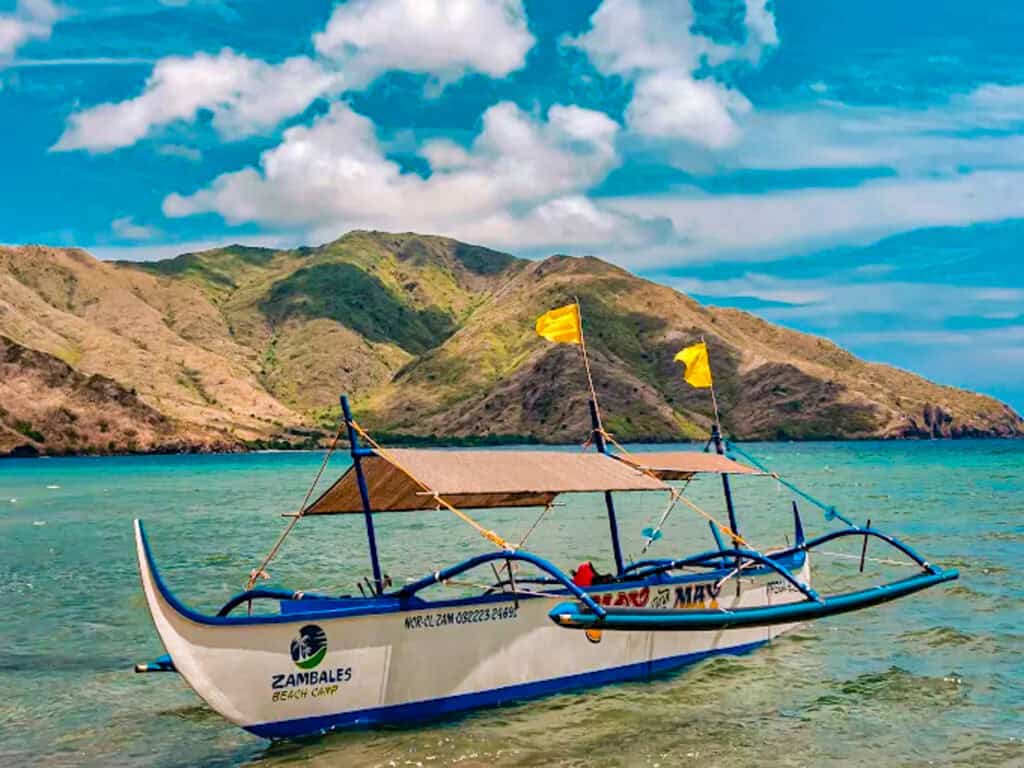
If you’re after beaches, the Zambales coast is the easy call, about two hours west. Volcanic-sand coves like Anawangin and Nagsasa, a Spanish-era lighthouse on Capones Island, and the surf town of Liwliwa are reason enough to turn a day trip into an overnight or two.
Here’s what to do in Zambales.
And if Angeles is just your first stop on a bigger Luzon trip, the hidden gems guide is where to go next. It maps 25 places most travelers miss, from the tattoo village of Buscalan in the far north to quiet islands in Bicol and cloud-sea hikes in the Cordillera.
Less a side trip from Angeles, more the rest of the island waiting once you’re ready to roam.
Read my guide to Luzon’s hidden gems.
It’s a Wrap
Angeles is not a city that sells itself in an afternoon. Give it a real plan, and it pays you back with food you’ll think about later, a crater lake most people never bother with, and a side of the place the airport crowd never sees.
I’ve lived here for years.
I still wouldn’t call it pretty, but I’d call it worth your time.